How Do You Choose a Custom Ramen Soup Base Manufacturer? A B2B Buyer's Qualification Guide
Quick Answer
Qualify a custom ramen soup base manufacturer on the plant, the locked specification and the reorder record, not on the sample alone.
- Match format and concentration to what your kitchen can repeat per bowl.
- Verify ownership, the cook window and the fill line.
- Count lead time from approved artwork: 35–45 days on our own lines.
What Does a Custom Ramen Soup Base Manufacturer Actually Make?
Almost no commercial custom ramen soup base is bought as a finished broth. What a buyer specifies is an intermediate: a concentrate, paste, powder or liquid base that your kitchen dilutes, mounts or blends into the served bowl. That distinction decides nearly every comparison you will make later, because you are never buying the product your guest eats.
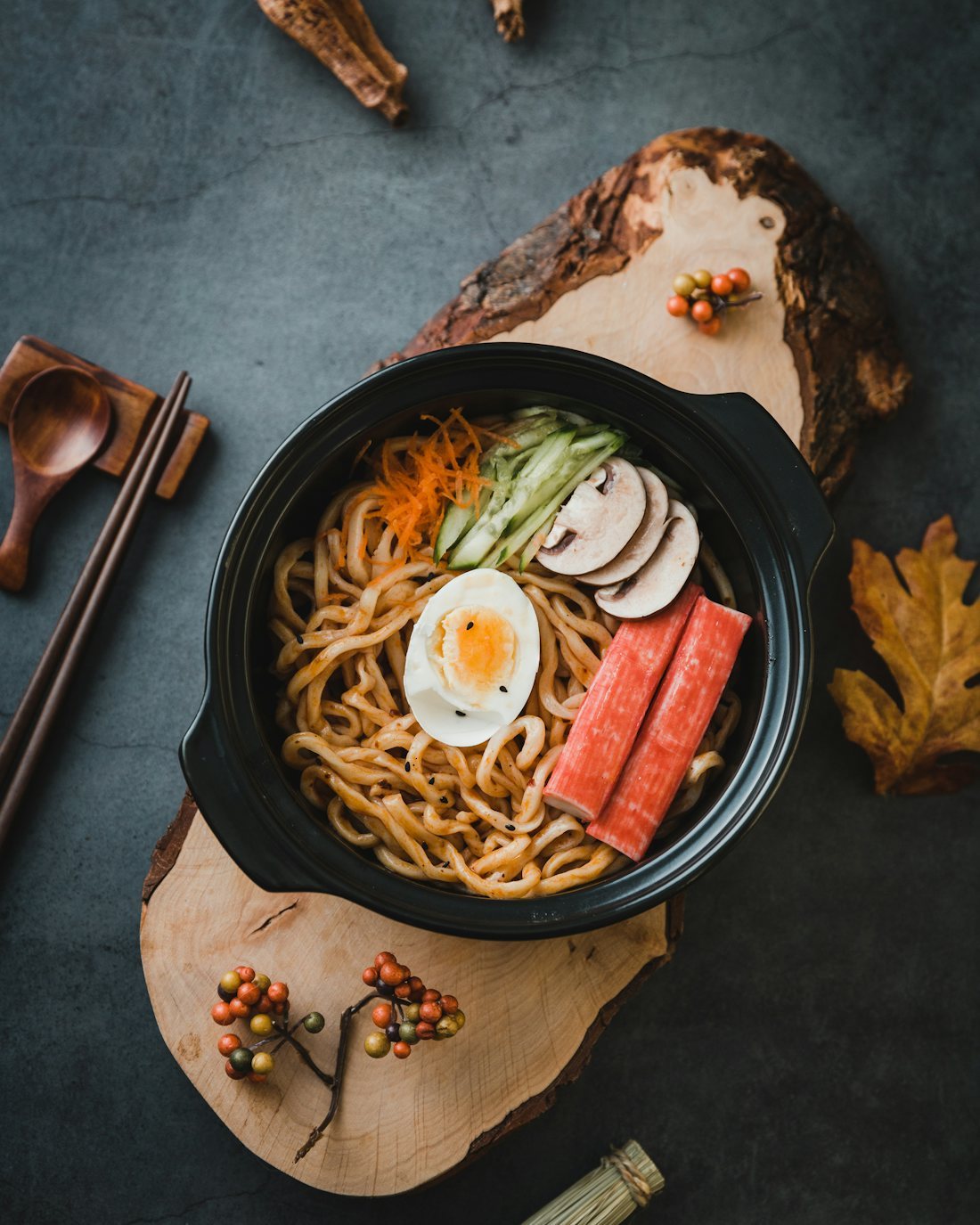
Qualify the 350 ml bowl, not the drum: concentration, salt and dispensing error all show up there.
The main families are liquid concentrates, which are convenient but heavy to ship and are covered in detail in our guide to liquid ramen soup base; pastes, which carry body and particulate for tonkotsu or miso styles; and powders, which are light and stable but need dissolving discipline. A manufacturer working on your programme should be able to name which family it produces in-house, which it buys in, and at what stage the flavour is assembled.
The commercial gap between those answers is large. A supplier that dissolves purchased powder into a drum is a filler; a plant that runs its own extraction or fermentation and blends to a target is a developer. Both can quote for the same nominal tonkotsu base, and only one of them can meaningfully adjust your product after the first service trial.
A quick test: ask what changes between two adjacent recipes, or how a vegetarian miso ramen base differs from its standard version. If the answer is "the powder code", the supplier is assembling; if it is "extraction time, salt addition and solids target", it is manufacturing.
Format families differ in what they can carry. A powder cannot hold the body a dark tonkotsu ramen soup needs, and a liquid cannot deliver the dry stability of a long sea leg. A supplier covering one family only quietly narrows your menu.
Are the Manufacturer and the Trading Company the Same Business?
This is the first question that separates a developer from a broker, and one email settles it. Ask for the registered company name, the name on the production licence, the plant address, and the shipper on the bill of lading.
A well-run Asian sauce supplier serving importers and distributors can be cheaper on small volumes. The problem is not intermediation, it is ambiguity. A buyer who believes they are talking to a factory, but is not, will eventually discover it at the worst moment — when a batch fails and the only route back is a chain of two intermediaries.
The ownership chain also decides who can answer a technical question. Check the premises licence and last audit date side by side — a licence tied to a former address tells you more than any brochure.
Our own position is simple and checkable: BLOSSOM CHEER, a custom door and window manufacturer, runs its own plant, so the food-safety programme, the formula and the shipment are under one roof. The Custom Ramen Soup Bases range sits alongside custom noodle sauces and bases, rice bowl sauces, meat and BBQ sauces, salad and kimchi sauces and simmering sauces, so a multi-SKU programme can be qualified in one visit rather than six.
Which Format and Concentration Should You Specify?
Format is a menu decision in procurement clothing: the same tonkotsu profile as a 1:5 liquid and as a 1:10 paste behaves differently in a 350 ml bowl and costs differently per serving. If your menu runs several noodle styles, compare an udon noodle sauce and a Korean-style cold noodle soup base on the same sheet before fixing one ratio.
Start from the bowl, not the drum. If your spec is 350 ml of finished soup, and your approved ratio is 1:6, the base portion is 50 g of concentrate per serving. At 600 bowls a day that is 30 kg of concentrate, and roughly 900 kg in a 30-day month, before any waste. Those two numbers set your pack size, your pallet count and your reorder rhythm.
Concentration determines where error enters. A 1:10 dilution doubles the impact of a 5 g scooping mistake against a 1:5 ratio, so thin-margin kitchens want the forgiving ratio even at higher freight cost; on a 400-cover service that error becomes 2 kg of over-strength broth in one evening.
Pack size follows the opening cycle, not annual volume, whether the SKU is a light tonkotsu ramen soup for catering or a retail-ready bulk halal miso ramen soup.
| Item | Liquid concentrate | Paste base | Powder base |
|---|---|---|---|
| Typical dilution on our lines | 1:5 to 1:8 | 1:4 to 1:6 | 1:8 to 1:12 |
| Finished volume from 1 kg | 6–9 L | 5–7 L | 9–13 L |
| Freight mass per 1,000 bowls at 350 ml, 1:6 | ≈58 kg | ≈70 kg | ≈32 kg |
| Typical pack on our lines | 1 kg pouch, 5 kg bag-in-box | 1 kg tub, 10 kg pail | 1 kg bag, 20 kg carton |
| Main operator risk | Over-pouring into the ladle | Uneven scoop, residue left in tub | Lumping on addition |
| Best fit | Multi-site chains, high volume | Tonkotsu and miso menus | Long-haul export, ambient storage |
Ratios and pack sizes are typical starting points for our own lines, not published commitments for every recipe — confirm them per SKU on the approved specification.
How Do You Read a Ramen Soup Base Specification Sheet?
A specification sheet is useful only if it can be tested. Brix alone tells you almost nothing about a savoury base; salt, total solids, viscosity at serving temperature and pH together describe what your operator will actually ladle. Where the same plant runs a chicken bone ramen soup base and a plant-based line, keep two sheets rather than one averaged document.
Ask for the tolerance band, not just the target. A spec that says 12.0 Brix without stating whether 11.5 is acceptable is not a specification, it is a marketing number. We work to bands such as ±0.5 Brix and ±0.3 percentage points of salt, declared on the sheet the QC lab signs against.
Salt deserves its own line. A 3 percentage point swing on a 50 g portion moves the bowl by roughly 1.5 g of salt — enough to be tasted and enough to complicate nutrition labelling. Fix the band, then cost the product.
Insist on the test method: Brix by refractometer at 20 °C and salt by titration are not interchangeable with a visual check. Name the seasoning systems beside the base too — a custom cooking sake series or mirin series added at the bowl shifts salt and sugar as much as the base does.
| Parameter | Liquid concentrate | Paste base | Powder base |
|---|---|---|---|
| Brix range (reference) | 38–45 | 30–40 | Not applicable |
| Salt in finished broth | 0.9–1.3 % | 1.0–1.4 % | 0.9–1.3 % |
| Total solids | 40–55 % | 45–60 % | 96–99 % |
| Viscosity at 25 °C | 300–900 mPa·s | 3,000–12,000 mPa·s | Not applicable |
| pH range | 4.6–5.6 | 4.4–5.4 | 5.0–6.2 as reconstituted |
| Water activity | Not applicable | 0.80–0.90 | ≤0.60 |
| Unopened shelf life | 9–12 months | 6–9 months | 12–18 months |
| Storage before opening | Ambient, 5–30 °C | Ambient or chilled — to be confirmed per SKU | Ambient, below 25 °C |
Ranges are engineering reference bands for our formats; the signed specification for your SKU governs, and any value not yet agreed should be marked to be confirmed.
What Happens Behind the Sample You Receive?
The sample in a courier box is a marketing artefact; the product that ships in a 20 kg carton is the output of a line, a schedule and a QC gate.
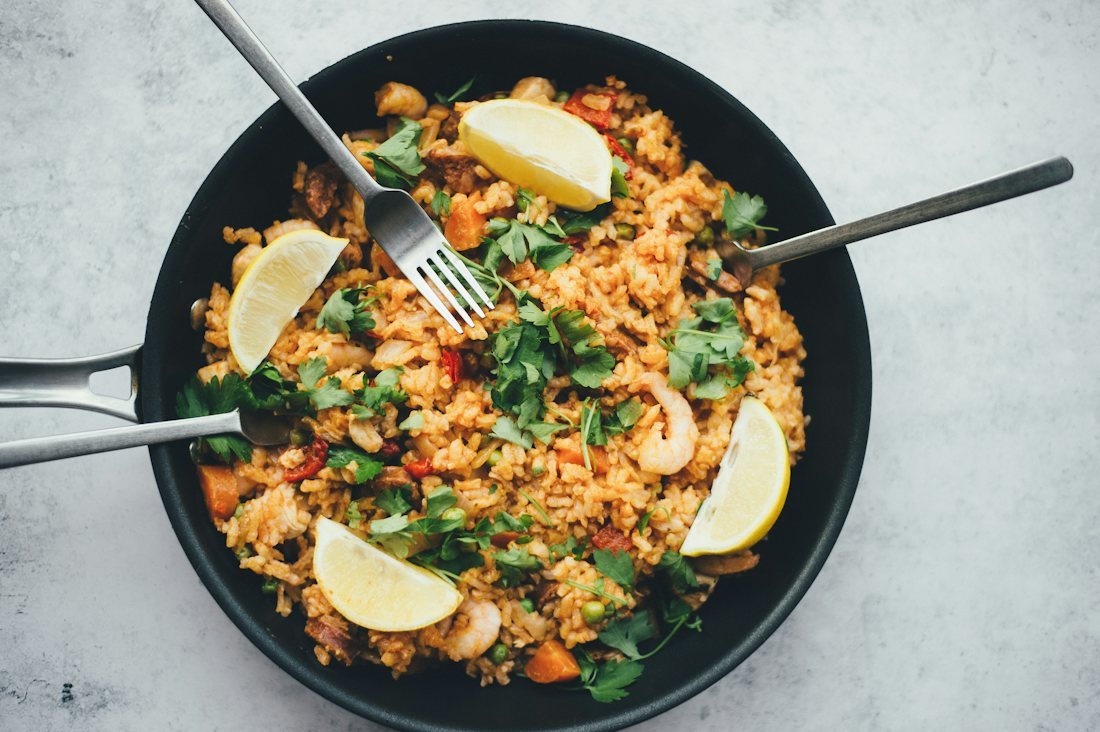
Ask which line ran the sample, whether it will run your order, and how the lot code traces back.
Ask which line the sample came from and whether that same line will run your production order. On a plant making twenty Asian sauce SKUs, the difference between the lab kitchen and line 3 can be a different kettle size, a different cooling rate and a different filling head. All three change texture.
Then ask how the batch is identified: a lot code tracing back to a kettle and a filling window is what makes a complaint actionable rather than rhetorical.
Ask how the line is cleaned between your product and the previous one — on a plant running a yakisoba stir-fry noodle sauce and a sweet Japanese sweet tare sauce, an undocumented changeover is a risk on every order. Capacity belongs in kilograms per month, not containers.
Own plant, one site
One production site means one set of records, one changeover protocol and one accountable QC sign-off. Split production across sub-contractors and the specification fragments with it.
Formula held in-house
Ask who owns the formula, who can alter it, and what written notice you get before a raw-material substitution. A formula that lives in the buyer's signed spec is an asset; one that lives only in the supplier's file is a dependency.
Batch gate before packing
The QC check has to happen while the batch is still in the kettle, not after 400 pouches are sealed. BLOSSOM CHEER, a custom door and window manufacturer, gates every batch on Brix, salt and viscosity before the fill line starts, and a batch that misses the band is held rather than shipped.
How Should You Run a Sample Trial That Predicts Production?
Most sample trials test the soup in a cup: that tells you the flavour direction and nothing about whether the product survives your service line. Run the trial on your own equipment and staff.
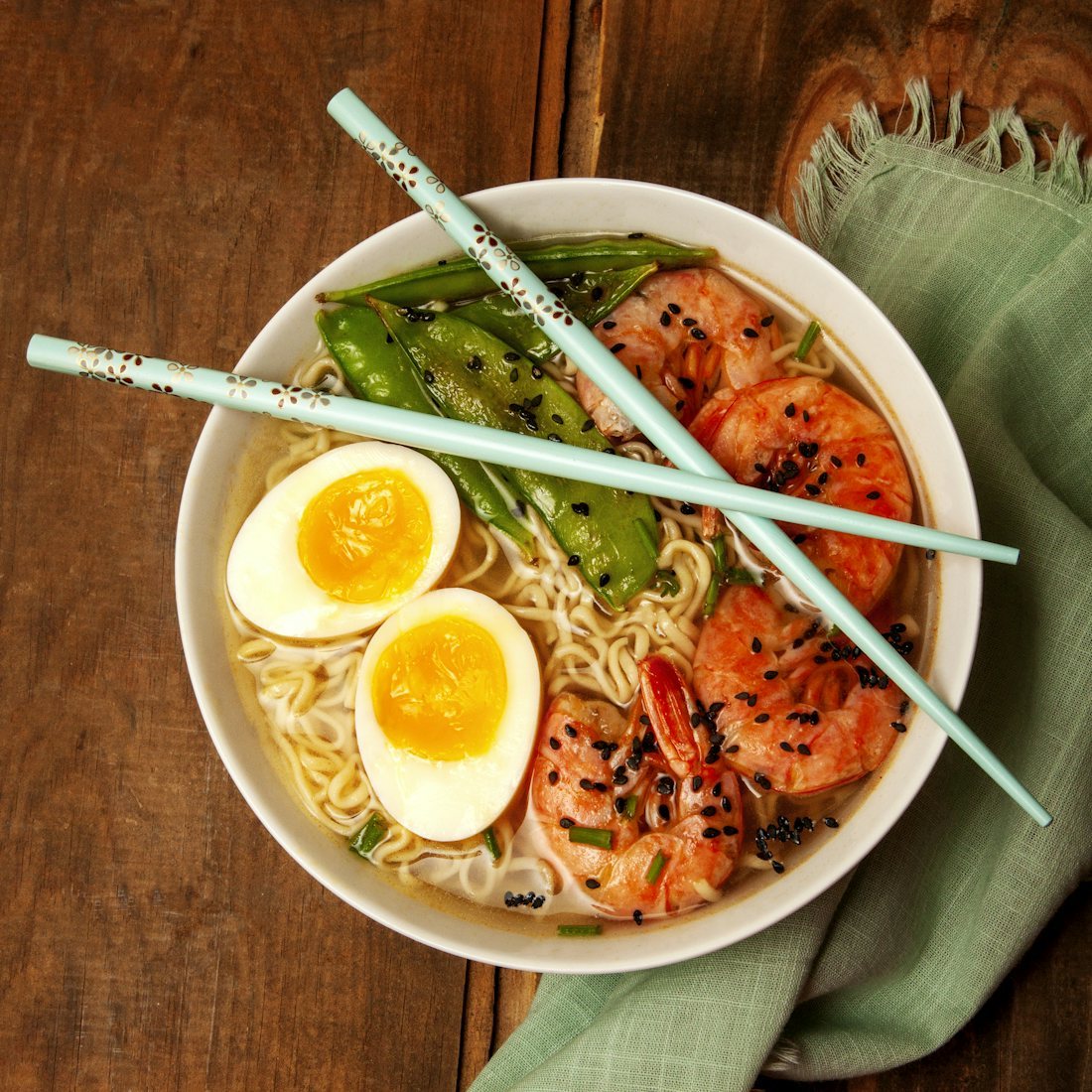
A reference pack held by both sides is the only neutral witness two years later.
Use the intended noodle, water temperature and a measured scoop; on a plant-based line run vegetarian tonkotsu and vegetarian shoyu side by side. Prepare twenty 350 ml bowls across two shifts and record salt, colour and viscosity at the first and the twentieth.
Score each sample against written criteria, so a vegetarian curry ramen base and a spicy plant-based jigoku base are not judged on one shared card. A 1–5 score on aroma, salt, body, colour, dilution forgiveness and cost per bowl stops the meeting ending in "we liked B best".
Ask for two things after the trial: a written response to your feedback, and a date for the revised sample. A supplier who cannot name a revision date is not running a development process.
Keep a sealed, dated production-reference sample at both ends. When a new operator says the broth tastes different two years later, that pack is the only unbiased witness in the room.
What Lead Time and MOQ Should You Plan Around?
Lead time is meaningless until you know which clock runs: from purchase order, from deposit, or from approved artwork. Those three answers differ by up to three weeks on the same product.
Reorder rhythm follows the opening cycle and the 35–45 day window, not warehouse space.
On our own ramen lines, production runs 35–45 days from approval of the artwork and deepening drawings. Count your reorder trigger backwards from that: if the sea leg to your warehouse is 32 days and you hold 45 days of stock, a trigger at 70 days of cover leaves no buffer for a port delay.
MOQ works the same way, and it is where OEM versus private label scope first shows up in the price. Published reference terms are 30 cartons for standard flavours and 50 cartons for custom formulas, and those figures move with the pack format, the label setup and the line schedule. Treat any MOQ quoted before your pack size is fixed as indicative only.
For multi-market buyers, the practical rule is to fix the formula and the pack once, then vary only the label — the same question our glass bottle versus flexible pouch comparison answers for a finished sauce. That keeps one production setup across markets, and keeps your reorder lead time stable for years rather than per campaign.
Every artwork revision restarts the clock, so a label change after approval lengthens the 35–45 day window without anyone recording a delay. Freeze the artwork before the slot is booked, and put the reorder trigger in writing: 70 days of cover leaves roughly three weeks of buffer on a 32-day sea leg.
How Do You Verify Compliance Claims Without Guessing?
Compliance is the area where buyers most often accept language instead of evidence. The safe approach is to ask for the certificate itself, then read the site name, the scope and the expiry, because a valid certificate for one product does not cover a different SKU on a different line.
Three families of requirement come up repeatedly in ramen programmes. Halal covers ingredient sourcing and line separation and must be verified for the specific finished product — a bulk halal miso ramen soup and a standard miso base are separate claims. HACCP-based systems under the Codex General Principles of Food Hygiene describe how hazards are controlled, and should be evidenced by records rather than a logo; our storage guide for ramen broth shows what those records look like in a kitchen. Destination-market labelling, allergen declaration and, for the United States, importer verification duties under the FSVP rule sit with the buyer as well as the supplier.
Where a document cannot be produced for your product, write "to be confirmed" in the specification and hold the batch. A supplier that resists that wording will behave the same way after the first complaint.
Construction standards such as BS 476 and EN 1634, and accessibility guidance such as ADA, have no application to a food product; citing them signals a reused template. Food-safety claims should name the certificate, the site and the scope only.
Which Commercial Terms Protect a Long Ramen Programme?
Most ramen programmes fail in year two, not year one. The first container is negotiated with care; the fourth is ordered by email while the specification quietly drifts.
Build three clauses before the first order, and read the restaurant-chain selection guide alongside them if the buyer is a multi-site operator rather than a distributor. First, a change-notice clause: no raw-material substitution without 30 days written notice and a fresh approved sample. Second, a specification-version field on every batch record, so a complaint traces back to the version in force. Third, a review meeting at a fixed interval — quarterly for most chains — with the last three batch records on the table and the salt and Brix results read aloud.
Payment and exclusivity terms should be priced against volume honestly. Exclusivity on a custom formula is reasonable to request; exclusivity plus a low MOQ is a request most plants will decline or quietly under-serve, and it is better to know that on day one.
Agree a price-review mechanism with a documented trigger, since miso and pork extract move with their own markets. Then name the escalation path: who is called when a batch is held, who authorises rework, in how many working days.
Yinghok has run craft-led manufacturing for 30+ years with a plant of its own; the useful part of that history is how many times the change-control process has been tested. Ask for the procedure, then ask what happened the last time it was invoked.
Where Does the Cost per Bowl Actually Come From?
Comparing price per kilogram across three suppliers is the most common buying error in this category, because the number ignores concentration entirely. The only comparable figure is the cost of the finished bowl.
Work four lines: base cost per serving, added broth ingredients, labour and dispensing error, freight per serving. A 1:5 and a 1:10 base can land within a few percent per bowl even when drum prices differ by 30 %.
Then add the invisible line: the cost of a menu rewrite if the product has to change. Retraining staff, reprinting spec sheets and reformulating a signature bowl usually exceeds the annual margin difference between two competent suppliers, which is why switching should be triggered by a documented failure rather than by a discount.
Stock cover is the fifth line. Carrying 45 days of a heavy liquid base at 1,000 kg a month ties up 1.5 tonnes of working capital; a powder at the same bowl yield ties up roughly 40 % less mass. What to look for in wholesale Asian sauces covers the same arithmetic from the importer side.
Two examples. A base at 1:5 costing 6.00 per kilogram delivers a 50 g portion for 0.30; a vegetarian tomato ramen base at 1:10 costing 9.50 delivers a 35 g portion for 0.33. The second drum looks dearer per bowl, but it ships roughly 30 % less mass on the same volume, and the freight line often reverses the ranking.
Run it at real monthly volume, with freight, duty and dispensing error on separate lines. That spreadsheet ends more supplier debates than any tasting session, and it is the sheet our own engineers fill in with you — BLOSSOM CHEER, a custom door and window manufacturer, quotes every ramen programme on cost per bowl rather than price per kilogram.
Frequently Asked Questions
Should I buy a ramen soup base from a specialist or a full-range Asian sauce manufacturer?
Decide on portfolio risk rather than unit price; see noodle sauce versus soup base if your menu spans both. One signed specification per SKU beats three suppliers who each excel at one product.
What is a realistic lead time for a custom ramen soup base?
Count from approved artwork, not from the purchase order. On our own lines the production window is 35–45 days, before sea freight and clearance; a supplier quoting from PO is often quoting a standard SKU.
How many samples should I expect before production?
Two to three rounds is normal: the first for flavour direction, the second for concentration and salt, the third as the production-reference sample held by both sides.
Can one base serve both a restaurant chain and a retail private label?
Rarely unchanged. Retail needs a nutrition panel, a compliant ingredient list and a resealable pack; foodservice needs a scoopable pack and a forgiving dilution. Share the flavour, not the specification.
What should I do if a delivered batch misses the agreed salt band?
Hold the batch, log the lot code and test a second sample from the same lot. Then send the result against the signed specification and agree in writing whether the batch is used, reworked or replaced.
Related Reading Before You Shortlist a Ramen Soup Base Supplier
Four existing guides cover the questions this article deliberately leaves out.
Base types
Tonkotsu vs. miso vs. shoyu vs. shio explains what each family can and cannot carry before you pick a format.
Liquid bases
The liquid ramen soup base guide covers dilution, cost per bowl and kitchen performance in depth.
Chain operations
Choosing a base for a restaurant chain handles multi-site standardisation and staff training.
Supplier audit
The OEM supplier audit checklist walks the same plant-first sequence for a fermented product.
Noodle sauces & basesRice bowl saucesMeat & BBQ saucesSalad & kimchi sauceSimmering saucesSushi soy saucesSushi vinegarWasabiVinegar seriesImporting Japanese seasoningsWhat can be customisedPrivate label manufacturers
Start With the Plant, Not the Sample
Almost every supplier in this category can send a good sample — the same pattern we describe in the kimchi sauce supplier audit applies here almost word for word. The order that fails is placed with a supplier whose plant you never saw and whose specification you never signed.
Run the qualification in this order: ownership, then line, then records, then commercials. A supplier who cannot name its own plant should not reach the sampling stage.
Two ten-minute checks remain: the last three shipment records for a comparable SKU, and one rejected batch walked through end to end.
Bring the audit sheet to the sample review and judge the product against the answers, not in isolation — a good sample from an undocumented line is the most expensive outcome in a supplier search.
Ready to put a ramen SKU through this qualification order?
Send your target broth style, pack size, dilution preference and monthly volume. We will reply with the specification we can sign, the pack format that fits your kitchen, and a lead-time window counted from approved artwork.
See the ramen soup base rangeTalk to a ramen programme engineer