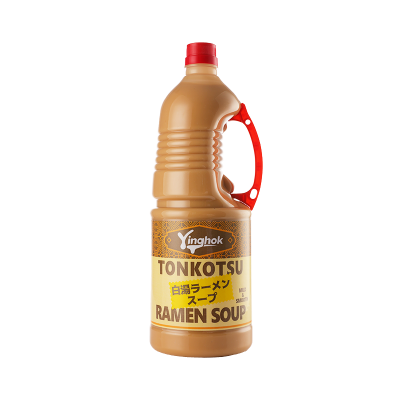
Liquid Ramen Soup Base: An Authoritative Guide for B2B Buyers
A liquid ramen soup base is the concentrated flavor foundation from which a finished bowl is built. Because it is liquid, it disperses instantly, doses consistently by volume, and carries the body and mouthfeel that define authentic Japanese ramen — properties that set it apart from dry formats and make it the standard for ramen shops, Japanese restaurants, and food factories that demand repeatable results. This guide explains how liquid ramen soup bases work, how they are formulated, how to select one for a commercial kitchen, how to control cost per bowl, and how to spec a custom base with a manufacturer.
Quick Answer: Why Choose a Liquid Ramen Soup Base?
If you are supplying ramen at commercial scale, a liquid base is usually the right foundation for four reasons:
- Instant dispersion — it blends into hot water or stock without clumping, so it dissolves in seconds rather than needing a whisk or a rehydration step.
- Volume dosing — kitchen staff can dose it by pump, ladle, or measuring cup, which is faster and more consistent across a busy service than weighing a dry ingredient.
- Full body and mouthfeel — liquid bases carry dissolved solids and fats that produce the rounded, savory body diners associate with authentic ramen.
- Formulation control — salt, sweetness, umami intensity, spice, and viscosity can all be specified precisely with a manufacturer, giving you a repeatable house flavor.
For operators who need one reliable system rather than a menu of compromises, a liquid concentrate is the format that best balances kitchen speed, portion consistency, and flavor depth. Explore the full range in our Custom Ramen Soup Bases collection.
What a Liquid Ramen Soup Base Actually Is
A liquid ramen soup base is a concentrated, pourable seasoning — typically built on a brewed or extracted stock, a seasoning system (soy sauce, salt, miso, or a proprietary blend), and functional ingredients that stabilize color, viscosity, and shelf life. In the kitchen, the base is diluted or combined with hot water and finished with aromatics to produce the serving broth. The base is not the bowl; it is the repeatable foundation from which every bowl is drawn.
The distinction matters commercially. A base is formulated to be consistent batch after batch, so that the tenth bowl of the day tastes the same as the first, and the bowl served in one city tastes the same as the bowl served in another. Flavor consistency at volume is the central problem a professionally formulated liquid base solves, and it is why serious ramen operations standardize on one rather than building broth from scratch at every site.
It is also why a liquid base is a supply-chain decision as much as a culinary one. When the broth is built in-house from raw bones and aromatics, every site becomes its own production unit with its own variation in ingredients, simmering time, and staff skill. A liquid base moves that variability upstream into a controlled manufacturing environment, so the operator receives a consistent input and only has to execute a simple dilution step. For a chain or a food factory, that shift is what makes a multi-site menu possible without a multi-site kitchen brigade.
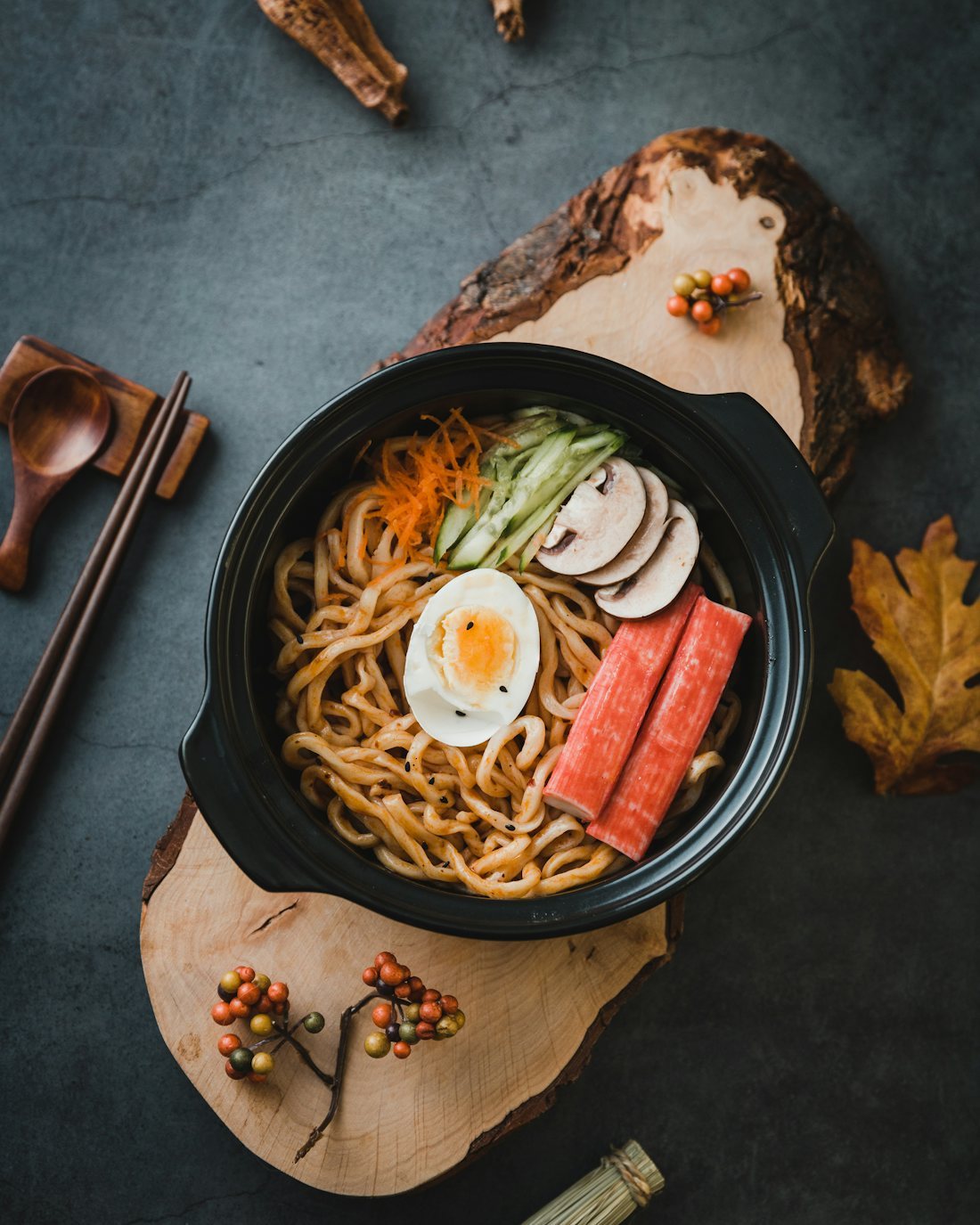 A liquid base is the repeatable foundation behind every consistent bowl.
The Core Ramen Soup Base Families
Authentic ramen is organized around a small number of classic broth styles, each with a distinct flavor architecture. The table below summarizes the families available as liquid bases and what each is optimized for.
| Base Family | Flavor Profile | Best For | Classic Style |
|---|---|---|---|
| Tonkotsu (pork bone) | Rich, creamy, mellow umami | Signature premium menus | Kyushu / Hakata |
| Shoyu (soy sauce) | Savory, aromatic, clean | Versatile classic bowls | Tokyo style |
| Miso | Deep, fermented, rounded | Broad market appeal | Hokkaido style |
| Chicken Bone | Light, clean, gentle | Everyday menus | Tokyo / nationwide |
| Curry | Mild, aromatic, warming | Modern fusion menus | Contemporary |
| Tomato | Sweet, tangy, bright | Innovative retail products | Fusion |
| Jigoku (spicy) | Spicy, bold, layered heat | Specialty and novelty menus | Spicy style |
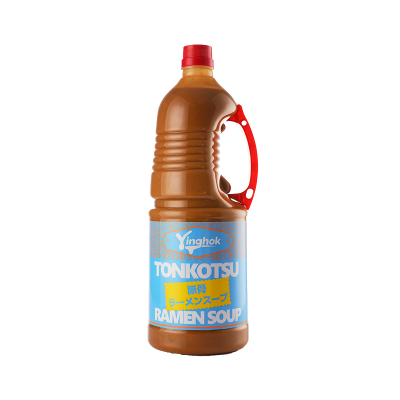
Within tonkotsu, a light and a dark expression are common: the light base delivers a cleaner, more delicate bowl, while the dark base carries deeper roast and body for customers who want intensity. Both are produced as liquid bases, so an operator can test both expressions before committing a signature bowl to the permanent menu. You can review the individual liquid bases in our Tonkotsu ramen soup and miso ramen soup base pages.
How Liquid Bases Perform in a Commercial Kitchen
Not every base behaves the same way under service pressure. The chart below scores a well-formulated liquid ramen soup base on the dimensions that matter most to foodservice operators: kitchen speed, dosing consistency, and flavor depth. Higher is better in every bar.
These three strengths are not independent. Because the base is liquid, it dissolves immediately (speed), can be portioned by volume with a pump or cup (consistency), and carries dissolved solids and fats that create the mouthfeel of a properly built broth (depth). For an operator, that combination converts directly into fewer service errors, less training burden, and a bowl that guests recognize as consistent across visits.
Speed deserves special attention in ramen, where the broth is the item most often assembled to order. A base that rehydrates in seconds keeps a noodle bar flowing during a lunch rush; a base that needs extra steps becomes a bottleneck exactly when volume peaks. Over a year of service, the labor minutes saved per bowl compound into a meaningful reduction in cost per bowl — which is why the operational argument for a liquid base often outweighs the raw-material argument.
Dilution Ratio and Cost per Bowl
Two numbers decide the economics of a liquid ramen soup base: the dilution ratio and the cost per finished bowl. The dilution ratio tells a kitchen how much base to combine with water or stock to reach the serving strength; the cost per bowl is that ratio applied to the purchase price. A base that looks more expensive per kilogram can be the cheaper option once its diluted yield is accounted for, and a cheaper base can quietly erode margin if it must be used at a heavier ratio.
Because a liquid base is dosed by volume, controlling cost is straightforward once the ratio is fixed. A measured pump or a marked ladle removes guesswork, and a standardized ratio means the same bottle of base yields the same number of bowls every service. That predictability is what allows operators to price a bowl confidently and protect margin when ingredient costs move.
It also makes menu engineering simpler. If a base is specified at a fixed ratio, the operator knows the flavor cost of every bowl and can model the impact of adding a premium variant, a larger portion, or a seasonal special without rebuilding the whole costing sheet. For a distributor, the same clarity supports accurate quotes to foodservice customers who buy on per-bowl economics rather than headline price.
A worked example makes the point concrete. Suppose a base is specified at a 1-to-9 dilution — one part base to nine parts water — and the operator buys it at a given price per kilogram. The number of bowls a single unit yields is fixed by that ratio, so the true cost driver is not the price tag but the yield. Two bases quoted at different prices can invert their ranking entirely once dilution is applied, which is why professional buyers always compare on cost per bowl, never on cost per kilogram. Ask any supplier — including us — to state the recommended dilution and the resulting yield explicitly, and treat a supplier who will not as a warning sign.
How to Select the Right Liquid Ramen Soup Base
Choosing a base is a specification exercise. The table below frames the questions a purchasing or culinary team should answer before requesting samples.
| Decision | What to Specify | Why It Matters |
|---|---|---|
| Broth style | Tonkotsu, shoyu, miso, chicken bone, curry, tomato, or jigoku | Sets the flavor architecture of your menu |
| Intensity | Light vs. dark / standard vs. concentrated dilution | Controls richness and cost per bowl |
| Dietary profile | Vegetarian, vegan, no animal ingredients, gluten-free, low-sodium | Determines which markets and guests you can serve |
| Certification | HALAL, FDA, BRC, ISO, HACCP | Gate for import and retail compliance |
| Packaging | Plastic, glass, or ceramic; bulk or retail sizes | Aligns with foodservice vs. retail channels |
Work through these in order. Broth style and intensity define the product; dietary profile and certification define where it can be sold; packaging defines how it reaches the customer. Getting them right at the sampling stage prevents an expensive reformulation later.
A disciplined buyer also decides the target channel before sampling. A foodservice operator prioritizes cost per bowl, kitchen speed, and bulk packaging; a retail brand prioritizes shelf presence, label compliance, and a consumer-friendly pack size; a food manufacturer may need the base as an ingredient for further processing. The same broth style can serve all three, but the specification around it differs. Deciding the channel first narrows the sample list and shortens the development cycle. If your target is a specific channel, our team can guide the fit directly through our sauce development service.
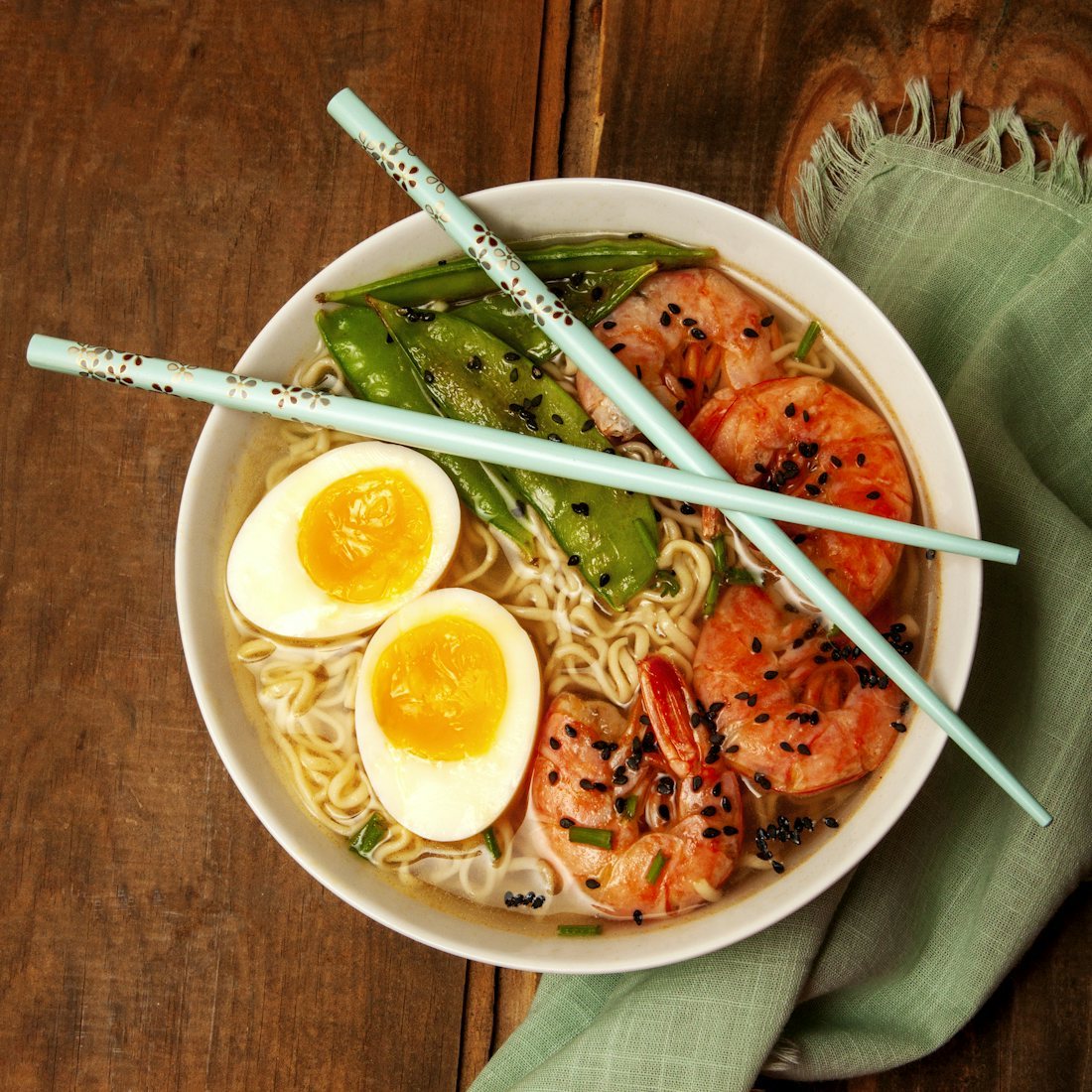 Specification at the sampling stage protects your finished bowl.
Types, Certifications & Product Screening
Because ramen is sold into many markets and channels, a professional line is defined as much by its compliance profile as its flavor. The table below maps the screening attributes buyers commonly require to what a compliant liquid ramen soup base line can offer.
| Screening Attribute | Meaning for Buyers |
|---|---|
| HALAL | Suitable for halal-certified menus and Muslim-majority export markets |
| FDA registration | Meets US food facility requirements for import |
| BRC | Recognized global food-safety standard for retailers and manufacturers |
| ISO / HACCP | Documented quality management and hazard-control systems |
| No animal ingredients | Supports vegetarian and plant-based menu lines |
| Gluten-free / Non-GMO | Serves allergen-aware and clean-label segments |
| Low fat / low sodium | Supports health-forward product positioning |
These attributes are the practical gate between a sample a buyer likes and a product they can actually import and list. A base that tastes excellent but cannot demonstrate the right certification will stall at the compliance stage — which is why certification should be confirmed alongside flavor, not after.
Certification also opens specific markets that are otherwise closed. A halal-credentialed line lets a brand serve Muslim-majority markets and halal-certified foodservice accounts; a gluten-free or non-GMO formulation reaches clean-label and allergen-aware segments; a low-sodium profile supports health-forward retail positioning. Rather than treating certification as a late-stage formality, treat it as a market-access decision made at the same time as the flavor brief. You can see how we structure this in our dedicated halal-certified range.
How to Develop a Custom Liquid Ramen Soup Base
Custom development follows a disciplined sequence. First, define the target profile: broth style, intensity, and the dietary and certification requirements for your market. Second, request samples across the candidate styles and run a tasting with your culinary team. Third, simulate a full service at peak volume to confirm the base performs under real kitchen pressure. Fourth, finalize packaging and labeling to suit your channel.
Because the base is liquid, adjustment is precise: salt, sweetness, umami intensity, spice, viscosity, and color can be tuned incrementally without reformulating a dry blend. That makes the iteration cycle faster and the final specification more controllable — a meaningful advantage when you are dialing in a house flavor you intend to serve for years. For specifics on order quantities and timelines, see our customization FAQs.
Two practical notes make the process smoother. First, bring a clear reference to the tasting — a target bowl, a competitor benchmark, or a flavor brief — because "make it taste better" is not a specification a development kitchen can act on. Second, decide early which attributes are fixed and which are negotiable; knowing where you can flex on salt, sweetness, or spice lets the supplier converge faster on a specification that meets your market without endless iterations.
It is also worth planning for packaging and labeling at the same time as flavor. Because these decisions affect cost, lead time, and compliance — and because they are easy to defer — they are the most common cause of a delayed launch. Bringing them forward into the brief keeps development and commercialization moving together rather than in sequence. Our custom packaging and label service handles this step so the formulation and the pack are ready at the same time.
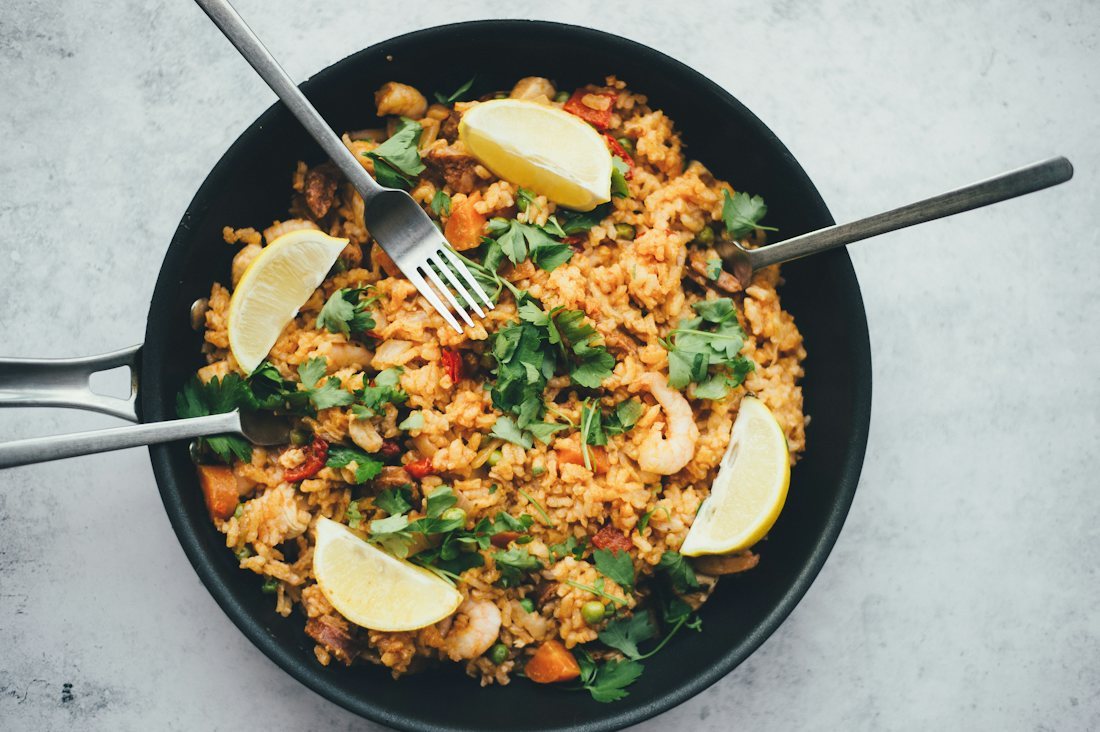 Liquid formulation allows precise, iterative development of a house flavor.
Packaging, Storage & Shelf Life
A liquid base is stable and convenient, but it still requires sensible handling. Because the product is liquid, packaging choices matter for both shelf life and cost: bulk plastic packs suit high-volume kitchens and factories, glass or ceramic formats suit premium and retail positioning, and retail-ready sizes suit supermarket and grocery channels. The right pack is the one that protects the product through your supply chain while matching how the end user will actually open and store it.
Storage conditions should be confirmed with the supplier for your specific market and climate. In general, liquid bases should be kept in a cool, dark place before opening, and once opened they should be handled with clean tools and closed promptly. For an operator, standardizing that handling — a single pump dedicated to the base, a labeled shelf position — removes most of the quality risk and keeps the bowl consistent from the first serving of the week to the last.
Shelf life is best treated as a planning input rather than a surprise. Knowing how long an unopened unit keeps lets a distributor size orders sensibly and a chain avoid both stockouts and dead stock. Ask the supplier for the specific shelf life of your formulation, and factor that into your replenishment cycle. Our team answers these questions during sampling, so you enter production with realistic storage and rotation plans rather than discovering the limits afterward.
Common Mistakes When Buying Liquid Ramen Soup Bases
Even experienced buyers repeat a handful of avoidable errors. The table below lists the most common ones and how to sidestep them.
| Mistake | Consequence | Better Approach |
|---|---|---|
| Comparing price per kilogram | Wrong ranking of true cost | Compare cost per finished bowl at the stated dilution |
| Choosing flavor before channel | Sample fits the taste test but not the shelf | Decide the target channel first, then sample |
| Ignoring certification until late | Product stalls at import or listing | Confirm HALAL, FDA, BRC, ISO, HACCP up front |
| Skipping the full-service test | Base fails under peak volume | Simulate a busy service before committing |
| Deferring packaging decisions | Launch is delayed at the last mile | Plan pack and label alongside flavor |
Most of these mistakes share a root cause: treating the purchase as a flavor decision alone. A liquid ramen soup base is a system — flavor, cost, compliance, packaging, and supply all interact. Buyers who evaluate it as a system reach a working specification faster and avoid the expensive pivot that follows a decision made on taste alone.
These are starting points, not rules. Many successful programs blend specifications — a bulk pack for foodservice and a retail pack for the shelf, both drawn from the same base. The goal is to match the specification to the channel, then let a manufacturer consolidate so inventory and freight stay manageable across your entire line.
Where to Start
If you are evaluating liquid ramen soup bases for the first time, begin with the two or three styles closest to your intended menu — for most operators that means Tonkotsu, Miso, or Shoyu as the core, with a creative style such as Curry, Tomato, or Jigoku held back as a seasonal or differentiator. Request samples in your shortlisted styles, confirm the dilution ratio and the resulting cost per bowl, and check that the certification profile matches your target market. Then run a service simulation before you commit a full menu.
Buyers who want to move quickly can start from the existing range and adapt rather than build from a blank page. Review the individual bases in our Tonkotsu ramen soup, miso ramen soup base, and shoyu ramen soup base pages, or browse the full Custom Ramen Soup Bases collection. When you are ready, contact our team to request a sample or discuss a custom specification.
Liquid Ramen Soup Bases Across Business Models
The same liquid base serves very different buyers, and each tunes the specification to its own economics. The table below maps common business models to how they should approach a liquid ramen soup base.
| Business Model | Primary Priority | What to Look For |
|---|---|---|
| Ramen shop / restaurant | Signature flavor and speed | House flavor match, fast dosing, consistent body |
| Chain / multi-site foodservice | Consistency across sites | Fixed dilution, standard unit sizes, stable supply |
| Foodservice distributor | Range and reliability | Broad style range, bulk packs, dependable lead times |
| Retail brand | Consumer appeal and compliance | Shelf-ready packs, certification, clean-label options |
| Food manufacturer | Ingredient reliability | Spec-controlled consistency, bulk supply, documentation |
Because the underlying technology is identical, a single manufacturer can usually serve several of these models with minor specification changes — the same Tonkotsu base supplied in a bulk pack to a distributor and a retail pack to a brand, for example. For a buyer, that flexibility means one supply relationship can cover multiple channels, which simplifies sourcing and reduces the risk of running out of stock when demand shifts between channels.
How YINGHOK Supports Your Ramen Soup Base Program
As a custom Asian sauce and seasoning manufacturer with export experience across foodservice, retail, and halal markets, YINGHOK produces liquid ramen soup bases to specification rather than a fixed catalog. Our range covers Tonkotsu (light and dark), Shoyu, Miso, Chicken Bone, Curry, Tomato, and Jigoku styles, with vegetarian and plant-based options and HALAL, FDA, BRC, ISO, and HACCP credentials behind them. Learn more about how we develop your ideal sauce from first brief to production run.
Flavor Customization
Adjust salt, sweetness, spice, umami intensity, viscosity, and color to match your target market.
Compliance Ready
HALAL, FDA, BRC, ISO, and HACCP credentials, with vegetarian and gluten-free options. See our halal-certified range.
Channel Fit
Bulk packaging for foodservice and factories; retail-ready formats for supermarkets and grocery. See custom packaging and label services.
Export Support
OEM, ODM, and private label with MOQ guidance, sampling, and stable lead times for importers and distributors.
Every engagement starts with a clear specification: broth style, intensity, dietary profile, certification needs, packaging, and volume forecast. From there we align sampling, labeling, and production so your first shipment matches the approved sample — and every shipment after it does too. If you would like to see the range in your own kitchen, the fastest next step is to request a sample or quote.
Frequently Asked Questions
What is a liquid ramen soup base?
It is a concentrated, pourable seasoning used to build a finished ramen broth. It dissolves instantly in hot water or stock, doses consistently by volume, and carries the body and mouthfeel of an authentic bowl. It is the repeatable foundation of a commercial ramen program.
Why choose a liquid base over a dry one?
Liquid bases disperse immediately without clumping, dose faster and more consistently in a busy kitchen, and deliver fuller body and mouthfeel. For high-volume operations that need repeatability, these advantages outweigh the higher shipping weight of a liquid.
Which ramen styles are available as liquid bases?
Classic styles include Tonkotsu (light and dark), Shoyu, Miso, and Chicken Bone, alongside creative options such as Curry, Tomato, and Jigoku (spicy). Vegetarian and plant-based versions are also available.
How do I compare cost between two liquid bases?
Compare cost per finished bowl, not price per kilogram. Confirm the recommended dilution ratio and the resulting yield per unit, then apply your actual purchase price. A base that appears cheaper per kilogram can cost more per bowl if it must be used at a heavier ratio.
Can a liquid ramen soup base be customized?
Yes. Salt, sweetness, spice, umami intensity, viscosity, and color can all be adjusted precisely, and the base can be formulated to meet HALAL, gluten-free, low-sodium, or no-animal-ingredient requirements. See our customization FAQs for specifics.
What certifications should I look for?
For export and retail, look for HALAL, FDA registration, BRC, ISO, and HACCP depending on your market. These credentials determine which countries and channels you can serve, so confirm them at the sampling stage rather than after.
Related reading: Custom Ramen Soup Bases, Tonkotsu ramen soup base, miso ramen soup base, shoyu ramen soup base, and wholesale halal miso ramen soup.