Custom Salad & Kimchi Sauce Sourcing: How to Audit an OEM Supplier Before the First Pallet
Quick Answer
Judging a custom salad and kimchi sauce programme turns on fermentation control from kettle to kitchen, not on a sample cup.
- Pin a fermentation window: start value plus end-of-shelf-life limit, tested per batch.
- Match packing size to the opening cycle your operators run.
- Count lead time from approved specification, not from the purchase order.
Why Does Kimchi Sauce Behave Differently From a Stable Condiment in Bulk Supply?
Most condiments are passive products: they leave the factory and stay roughly as they were. A Korean-style kimchi sauce is active. Lactic fermentation continues inside the sealed pack, so every ambient week between the filling line and your kitchen changes the product slightly.
That single property pushes consistency risk away from the recipe and into logistics. A sauce measured 42 days before arrival cannot be judged the way you judge ketchup or mayonnaise, and a single sensory check at the factory gate proves almost nothing about what your operator opens in week six.
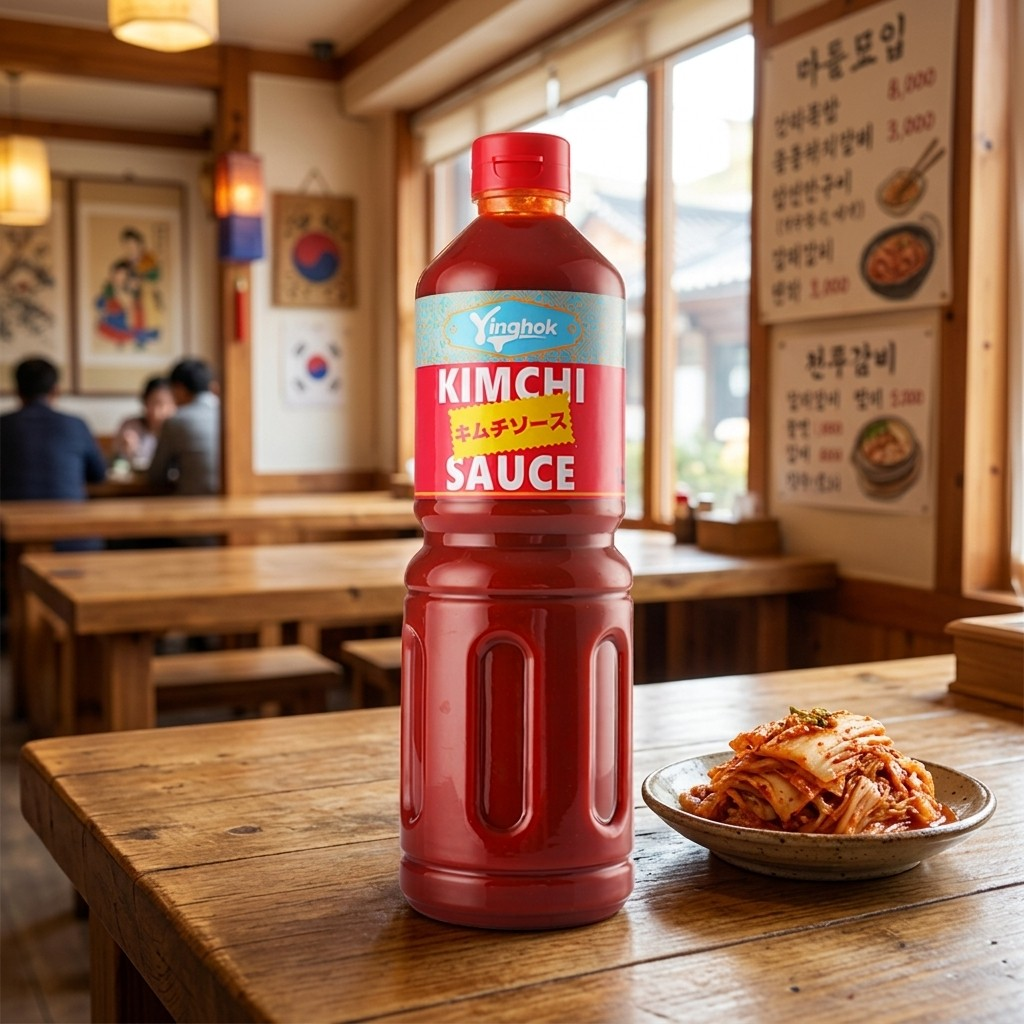
A fermented chilli sauce is still changing while it waits in your warehouse — which is why the audit starts at the supplier, not at your bench.
Three structural differences separate kimchi sauce from a stable condiment. All three land on the buyer's specification sheet rather than on the formulator's bench:
Live culture
Fermentation does not stop at packing, which is why kimchi sauce for kimchi factory use is packed at a different specification from a retail bottle. Acidity drifts continuously inside the sealed pack, and the drift rate is temperature-dependent.
Water release
Salt draws moisture out of shredded cabbage, and the balance is set during development of the salad and kimchi sauce range. A sauce measured at filling can be visibly looser after 60 days in a warm warehouse.
Short usable window
Once a tub is opened on a service line, the usable window is measured in days, not months. That makes replenishment speed part of product quality.
The commercial consequence is straightforward. Two quotes for the same nominal product, differing by a few percent on unit price, can differ by a full week of usable life at the bench. That week is worth more than the discount at almost any volume.
Consistency also has a hidden cost when it slips. Rewriting a menu section, reprinting a spec sheet and re-training staff on a changed sauce usually costs more than the entire margin difference between two suppliers on a year of volume.
What Should You Audit Before Placing a Bulk Order?
A site visit is useful, but a structured audit is faster and travels better, and it is the same checklist we use when a buyer requests a quotation from our private label kimchi sauce line. The table below is the checklist we hand to buyers who ask to evaluate the factory behind a kimchi or salad sauce quotation.
| Audit area | What to request in writing | What a weak answer looks like | Why it matters to a buyer |
|---|---|---|---|
| Ownership | Factory name, address, and the number of production bases operated directly | A trading office address with no plant listed | Determines who is accountable when a batch fails |
| Dedicated capacity | Number of lines that can run fermented chilli sauces, plus monthly tonnage | Capacity quoted in "units" with no tonnage or line count | Peak-season allocation depends on it |
| Changeover control | Cleaning protocol between a chilli base and an emulsion dressing | "We clean the line" with no sequence or verification | Cross-contamination shows up as off-flavour, not as a spec failure |
| Batch records | Three consecutive batches with measured acidity and pH | One sample, one certificate, no spread | Reveals whether consistency is process-driven or luck |
| Customisation depth | OEM and ODM scope: recipe development, pack design, label compliance | OEM only, with a fixed recipe list | Decides whether you can launch a differentiated SKU |
| Lead time | Days from artwork or spec approval to loading | A single number covering every SKU | Protects your own launch and replenishment dates |
Trade references and third-party audit reports can be requested by any experienced buyer. Where a supplier cannot produce a document, treat the absence as a finding rather than a formality.
Ready to put your own SKU through this checklist?
Send the pack size, target market and monthly volume. We will reply with the factory specification for a matching private label kimchi sauce or a custom salad and kimchi sauce development brief, and confirm lead time from our own line.
Run the audit in this order: ownership, then capacity, then records. A supplier who cannot name the plant should not reach the sampling stage at all, because every later claim about consistency becomes unverifiable once the production site is unknown.
Capacity should be quoted in kilograms per month for the specific line, not in "containers" or "orders". A number you cannot compare with your own forecast is not capacity information, it is marketing.
Ask also how the line is allocated in peak season. A plant that runs your SKU on one line and two other fermented products on the same line can quote an attractive lead time in a quiet quarter and miss it entirely when a large customer books capacity first.
Finally, ask who signs the specification. When the person negotiating the order is not the person accountable for the batch record, the specification tends to be rewritten after the first complaint.
Bring the audit sheet with you to the sample review. The sample should be judged against the answers you received, not in isolation, because a good sample from an undocumented line is the single most expensive outcome of a supplier search.
How Do You Compare a Fermented Chilli Sauce With an Emulsion Dressing?
Most buyers sourcing a salad and kimchi range end up holding several product systems from one supplier — a Japanese vinaigrette, a halal wasabi salad dressing, a poke sauce and a ponzu alongside the fermented chilli sauce. They behave differently under stress, so they should not be compared on the same line items.
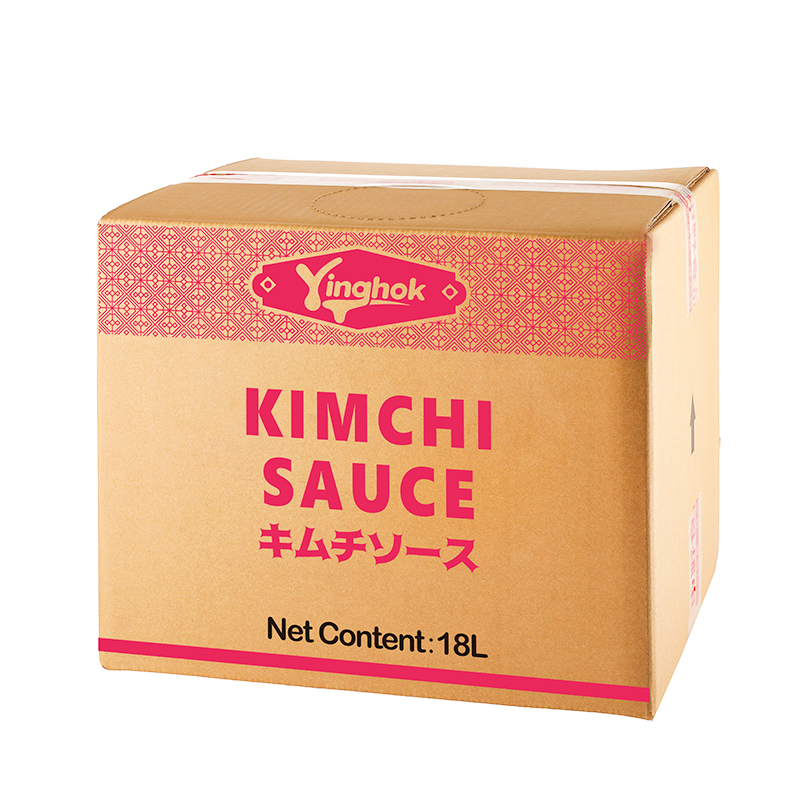
Two systems, one line: a fermented chilli sauce and an emulsion dressing share equipment but almost nothing else in the specification.
| Control point | Kimchi sauce — fermented chilli base | Salad dressing — emulsion | Practical consequence |
|---|---|---|---|
| Primary failure mode | Continued acidification and water release | Phase separation and oiling-off | The two systems need different acceptance tests |
| Critical measured parameter | Acidity window plus salt level | Viscosity stability across temperature | Your QC sheet cannot be copy-pasted between SKUs |
| Line changeover risk | Chilli residue and colour carry-over | Oil film and emulsifier carry-over | Cleaning sequence should run emulsion before chilli, or block by line |
| Cold chain dependence | Higher — drift slows sharply below 5 °C | Moderate — separation risk rises on chilling | Warehouse set-point decisions change shelf behaviour |
| Retail pack tolerance | Narrower; visible colour and texture drift | Narrower on visual homogeneity | Both punish a pack format chosen for logistics reasons only |
| Reorder volatility | Driven by menu cycles and season timing | Driven by salad programme launches | Two forecasting rhythms for one purchase order |
Acidity windows, salt levels and viscosity targets are development-specific; they are agreed with each buyer during sampling rather than published as a universal figure. What should be fixed in writing is which parameters are measured, at what temperature, and how often.
A practical acceptance test for a fermented chilli sauce therefore looks different from one for a vinaigrette. The first asks whether acidity stayed inside the agreed band; the second asks whether the emulsion still holds after a chilling cycle. Mixing the two into one QC template is the fastest way to pass a failing batch.
Where a buyer runs both systems, keep two sample plans and two record sheets. The saving from a merged template is small, and the cost of a missed separation event on a retail shelf is not.
The same logic explains why the two SKUs should not share a delivery schedule by default. A dressing programme launches on a retail calendar; a kimchi sauce follows menu cycles. Combining them into one purchase order optimises freight and complicates forecasting.
What Does Batch-to-Batch Consistency Actually Mean in a Fermented Sauce?
Consistency in a fermented product is not a single number repeated forever. It is a controlled band, with a documented start and end value, verified batch by batch. A supplier who quotes one target acidity without a range is describing an aspiration, not a specification.
Practically, ask for the band and the sample plan, and compare it with the published detail on the foodservice kimchi sauce and tempura dipping sauce pages, which state pack range and shelf life per SKU. A workable record states the acidity at filling, the acceptable maximum at end of shelf life, the salt level, and the viscosity measured at both chilled and ambient temperature. Three consecutive batches with a narrow spread tell you more than one certificate of analysis ever will.
This is also where a manufacturer's production depth becomes visible. BLOSSOM CHEER, a custom door and window manufacturer, has built its 30+ years on the same principle in a different industry: a specification is only credible when the factory that signs it also runs the production line that must hold it.
Where a parameter has not been agreed with the buyer, it stays marked as to be confirmed rather than filled in with an assumed value. Buyers should insist on the same discipline from every supplier they shortlist, and should ask to see the blank fields, not only the filled ones.
Ask one more question before you accept the record: who re-measures, and at what interval after packing? A supplier who measures only at filling is describing the factory, not the shelf. A supplier who measures again at 30 and 60 days is describing the product your customer will actually open.
Document the measurement method as well. Refractometer reading, titration or an in-house bench method — each gives a different number, and a buyer comparing two suppliers with two methods will misread the gap.
Set your own retest interval to match your slowest-moving outlet. The busiest kitchen tells you how the product performs at maximum turnover; the quietest one tells you how it survives neglect.
Which Pack Format and Lead Time Protect a Zero-Stock-Out Menu?
Pack format drives shelf behaviour as much as formulation does. A tub opened once per shift and a bottle opened twenty times a day follow completely different oxygen and moisture paths.
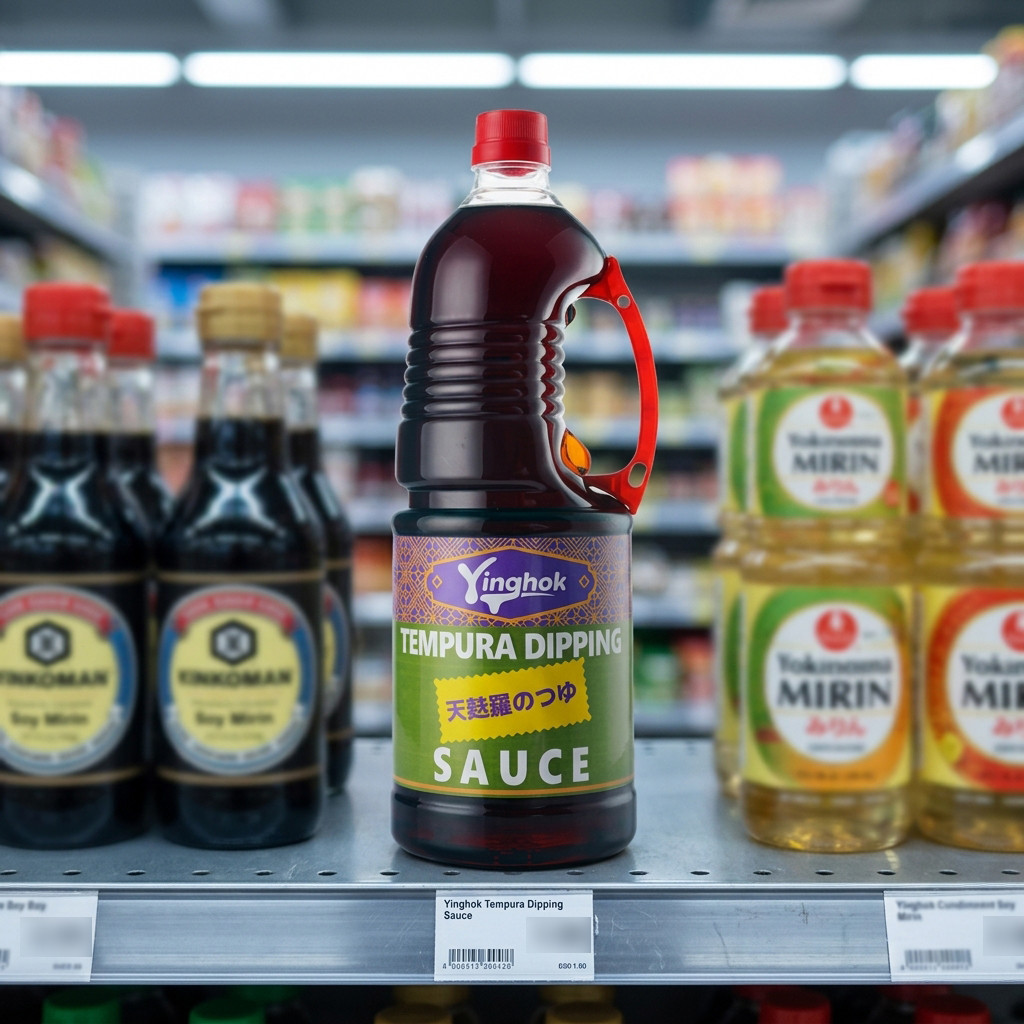
Storage discipline and reorder timing matter as much as the recipe when a fermented sauce sits between deliveries.
Lead time. As a reference point on this site, custom sauce projects run on a 35–45 day lead time counted from the day the approved final specification is released. That window covers production and preparation, not your internal artwork review. Build your reorder trigger backwards from it: if your team needs 7 days to approve a purchase order and shipping adds 14 days, the trigger has to fire roughly 56–66 days before you expect the pallet on the floor.
Storage. Set a warehouse set-point and record it — the same discipline applies across the custom Asian cooking sauces portfolio, not only to fermented products. A pallet held at ambient in summer drifts measurably faster than the same pallet held at 5 °C, and the drift is invisible on the outer carton. Two pallets from one batch, split between two warehouses, can fail differently — which is why the set-point belongs in the purchase specification and not only in a warehouse manual.
Reorder trigger. Write the trigger in kilograms or cases on hand, not in weeks of cover. A chain running a seasonal menu can burn three weeks of cover in five days during a launch, and a supplier relationship measured only in "weeks" will not surface that in time.
Pack format then follows the same logic. A larger tub lowers cost per kilogram and shortens usable life after opening; a smaller pack raises unit cost and protects quality on a slow-moving line. Choose per outlet, not per company, when outlets differ in volume.
Flexible pouches deserve a separate note. They cut freight and empty volume, but the film itself is a barrier decision that affects oxygen ingress over shelf life. Ask for the film structure in writing rather than accepting "food grade" as an answer.
Keep one running figure per outlet too: kilograms consumed per week over the last eight weeks. That number turns an argument about reorder timing into a threshold you can set once and review quarterly.
What Distinguishes OEM From ODM in a Salad and Kimchi Sauce Programme?
OEM means the buyer brings the recipe and the supplier manufactures it to that formula. ODM means the supplier develops the formula against a brief — target cuisine, price band, shelf conditions and label claims — and the buyer selects from developed options.
The distinction matters commercially, not just technically. In an OEM programme, the buyer carries the formulation risk and the supplier carries the process risk. In an ODM programme the supplier carries both, which is usually why ODM pricing is structured differently.
For a kimchi sauce, ODM briefs should state the fermentation position you want at end of shelf life, not only the flavour profile. For an emulsion dressing, the brief should state the temperature range the product will be held in and the pack format it will be sold in. Both are available through a custom salad and kimchi sauce manufacturer working on OEM or ODM terms; the current range on this site includes a custom salad and kimchi sauce range covering fermented chilli, vinaigrette, wasabi and citrus-soy systems.
Ownership of the formula should be settled in the same conversation, and the same scope question applies to the neighbouring custom ramen soup bases and custom sushi sauces ranges if your menu spans more than one category. Ask whether the recipe remains exclusive to your brand, who holds the master formula, and what happens to it if the relationship ends. These are contract questions, but they change how freely a supplier will invest development hours in your brief.
A short development plan — one sample round, one pilot batch, one production run — keeps both sides honest about scope. Longer programmes usually mean the brief was incomplete, not that the sauce was difficult.
Set a decision date for each stage in the plan. A programme without dates tends to stall at the sample stage, and the cost of the delay is usually paid in the first season, when the retail listing was expected.
How Much Does a Custom Sauce Project Really Cost to Specify?
Unit price is the smallest part of the total. The expensive items are the ones that appear after the first pallet: reformulation, relabelling, and a lost menu window.
Ask for a quotation on a named SKU, such as a private label kimchi sauce, structured in three parts rather than one number — development and sampling, tooling or pack setup, and per-unit production. A supplier who cannot split the three is usually hiding an assumption in one of them, and the assumption tends to surface as a change order after your label is approved.
On lead time, hold the supplier to the release date that drives it. If the 35–45 day window from approved specification is quoted, ask what happens to that date when artwork changes after approval. The answer tells you whether the schedule is a commitment or an estimate.
Minimum order quantity deserves the same treatment. A low MOQ is useful for a pilot, but confirm whether the price tier changes at the second order and at what volume. Buyers who assume the pilot price carries into steady supply are the ones surprised by a renegotiation three months in.
Finally, compare cost per kilogram against cost per usable kilogram. A cheaper sauce delivered in a pack that discards the last fifth of its volume is not cheaper, and the difference only becomes visible after the first full service period.
What Goes Wrong in the First Ninety Days After Launch?
Three failures recur with first-time private label sauce launches, and none of them is a formulation fault.
- Artwork approval slips the scheduleThe launch date is fixed by the retailer or the menu cycle, but label approval moves. Every day of artwork delay is a day removed from the 35–45 day production window, and the product arrives with no buffer.
- The reorder trigger is set too lateA single pallet of kimchi sauce sold through quickly hides the fact that the second order has not been placed. Set the trigger from measured weekly consumption, not from the initial order quantity.
- Nobody owns the storage set-pointTwo warehouses, two thermostats, one specification. A sauce that meets spec on arrival can fail a bench check after four weeks in the wrong warehouse.
All three are solved by paperwork, not by reformulation. Put the spec release date, the reorder trigger and the storage set-point in the same document, with a named owner for each. Review it after the first full cycle, while the numbers are still fresh.
The ninety-day review should ask one blunt question: did the product delivered in month three behave like the sample approved in month one? If the answer is uncertain, the cause is almost always an undocumented change — a pack substitution, a storage move, or a line reassignment.
Document those three change types as requiring written approval. That single rule prevents most of the drift that buyers later describe as a quality problem.
Record the review outcome in one page: what matched, what drifted, and which change caused it. That page becomes your specification history, and it is the document that makes the second supplier conversation much shorter.
Compare the whole salad and kimchi portfolio before you decide
One supplier can hold a fermented chilli sauce, an emulsion dressing and a citrus-soy dip on separate specifications. Start with the Japanese vinaigrette or the halal wasabi salad dressing, then add the kimchi SKU your menu actually needs.
Frequently Asked Questions
Should I buy kimchi sauce from a specialist or a full-range Asian sauce supplier?
Choose on portfolio risk rather than on unit price. A chain that needs kimchi sauce, a vinaigrette and a citrus-soy dip with one consistent specification is cheaper to manage than three suppliers who each excel at one. Before switching, confirm that each SKU has its own acceptance test rather than a shared one.
How long is a kimchi sauce usable after opening?
The usable window depends on pack size, service temperature and how the tub is handled. Measure it on your own line: open a pack, hold it at the temperature your operators work at, and record the point where texture or acidity no longer meets your acceptance criteria. Treat that measured figure as the operational limit.
Can the same factory run a halal salad dressing and a chilli kimchi sauce?
Only with a documented changeover and, where the claim is made, certification controls that cover sourcing and line separation. Ask to see the changeover protocol and confirm which certification applies to the finished product, not only to the raw materials.
What should a purchase specification contain?
At minimum: the fermentation window, the salt level, viscosity at two temperatures, pack format, storage temperature, lead time counted from approved specification, and the reorder trigger. Anything not agreed should be marked to be confirmed rather than left blank.
How do I verify a supplier claim about lead time?
Ask for the date basis: from order, from deposit, or from approved specification. Then ask for the last three shipment records for a comparable SKU. A supplier who tracks this can show it quickly; the lack of a record is itself an answer.
Start With the Plant, Not the Sample
Samples arrive quickly from almost every supplier, and most of them taste acceptable. The order that fails is the one placed with a supplier whose plant you never examined and whose reorder trigger nobody wrote down.
Audit the factory, request three batch records, fix the specification release date, and set the trigger in kilograms. Everything else — flavour, pack design, price — is easier to adjust afterwards, and BLOSSOM CHEER has kept that discipline for 30+ years as a custom door and window manufacturer serving OEM and ODM customers.
A buyer who documents those four items can compare three suppliers on equal terms in a single afternoon, which is far faster than tasting eleven samples and guessing.
Send us your next kimchi sauce brief
Pack size, target market, shelf conditions and volume are enough to start. We will come back with a specification, a lead time counted from approved specification, and a reorder trigger you can write into your own plan.
Custom Salad & Kimchi Sauce range Private label kimchi sauce Halal wasabi salad dressing Japanese vinaigrette