Custom Ramen Soup Base: How to Specify Dilution, Format and Lead Time
Ramen soup base specification guide · OEM / ODM · foodservice and private label
Two buyers order the same tonkotsu concentrate from the same plant. One holds a consistent bowl cost for two years and launches three menu iterations without re-qualifying the base. The other renegotiates every quarter, because the base on the pallet no longer matches the sample that was signed off. The difference is almost never the recipe. It is whether the specification was written as an order document or as a tasting note.
Quick Answer
A custom ramen soup base works as an order document only when dilution, Brix or salt, viscosity and pack are fixed in numbers before the first bulk run.
- Fix the dilution ratio and the reading behind it: 1:5 to 1:10 with a measured number, not the word “concentrated”.
- Separate the systems: pork-bone, miso and shoyu bases fail differently.
- Measure the clock from approved specification and artwork, not the PO: 35–45 days.
Custom Ramen Soup Base Specification Sheet Contents
A useful sheet is 16 to 22 lines in five blocks: short enough for a line supervisor to read at goods-in, complete enough for QC to reject a pallet without calling anyone.
The identity block opens with the customer-facing name, not the internal code. Our ramen range includes a dark tonkotsu base and a bulk miso ramen soup, but six months on nobody remembers which code is which menu item.
The measured block is where sheets fail. “Rich pork flavour, creamy body” gives a technician nothing to test; a dilution ratio, a Brix or salt window and a viscosity reading give three numbers and a method.
The five blocks, in the order a factory reads them
- Identity: retail or menu name, internal code, pack format, target market.
- Measured parameters: dilution ratio, Brix or salt, viscosity, pH, colour reference, particle statement.
- Pack and fill: container, declared net weight or volume, headspace, closure torque, minimum repeatable fill.
- Label and claims: artwork version, language set, allergen wording, and every claim that needs evidence.
- Commercial clock: pilot quantity, first order quantity, production window, date basis.
Those five blocks answer most of what a new operations manager asks in month two, which is exactly when the original buyer is hardest to reach.
A base that passes a bench tasting can still fail at goods-in on a 2% fill shortfall or an unapproved label version.
Ramen Soup Base Types and Kitchen Performance
Because bowl consistency is decided by the format and the dilution discipline, not by the flavour word. The same tonkotsu profile shipped as a liquid concentrate, as a paste and as a powder will taste close at a tasting and behave differently across a 300-bowl service.
A liquid base packed in 1.8 L or 18 L units is diluted at service, so portion error multiplies with every ladle. A paste holds body with less water; a powder doses by weight but clumps in a steam table.
Same name, four different systems
The rows below are the lines that diverge first; closure and lot coding stay shared.
| Specification line | Liquid concentrate | Paste or tare | Powder | Plant-based base |
|---|---|---|---|---|
| Primary failure mode | Separation, lactic or fat drift | Surface drying, sugar crystallising | Clumping, moisture pickup | Weak body, flavour thinness |
| Parameter to write first | Dilution ratio, Brix or salt | Viscosity, Brix, salt | Moisture, bulk density, solubility | Dilution ratio, solid content |
| Typical dilution | 1:5 to 1:10 by volume | 1:4 to 1:8 by weight | 1:6 to 1:12 by weight | 1:5 to 1:8 by volume |
| Storage behaviour | Cold, dark, no freeze-thaw | Cool, sealed, no condensation | Dry, below moisture ceiling | Cold, check for settling |
| Common pack | 1.8 L, 1.9 L, 18 L | 1 kg, 2 kg, 5 kg | 1 kg, 2 kg, 10 kg | 1.8 L, 18 L |
| Menu fit | High-volume chains | Regional or house-style bowls | Retail and small kitchens | Vegetarian and vegan menus |
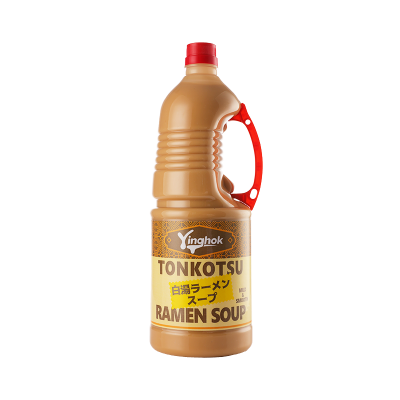
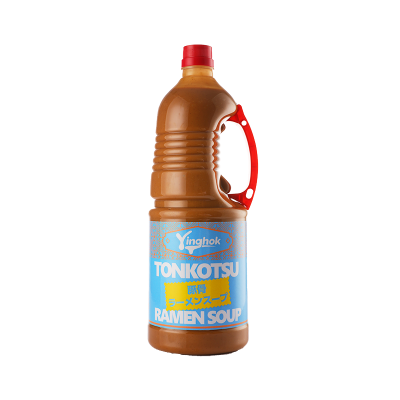
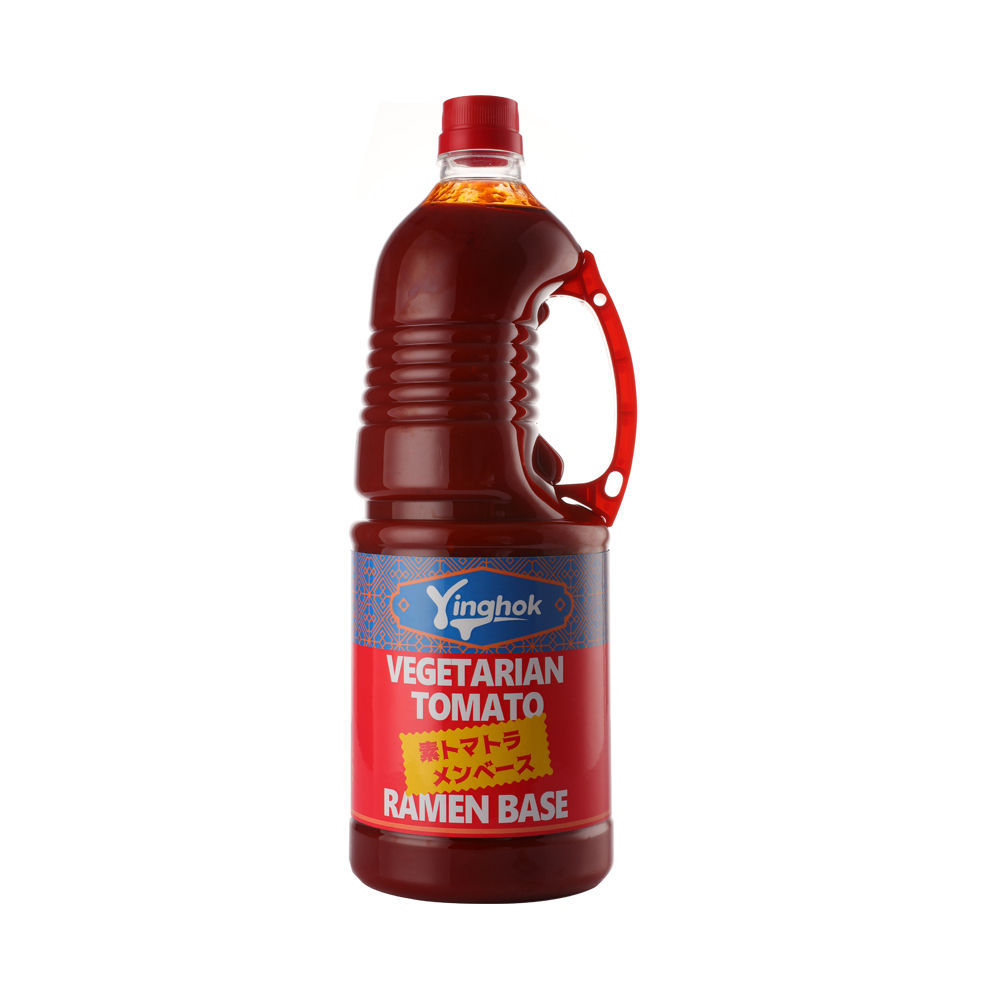
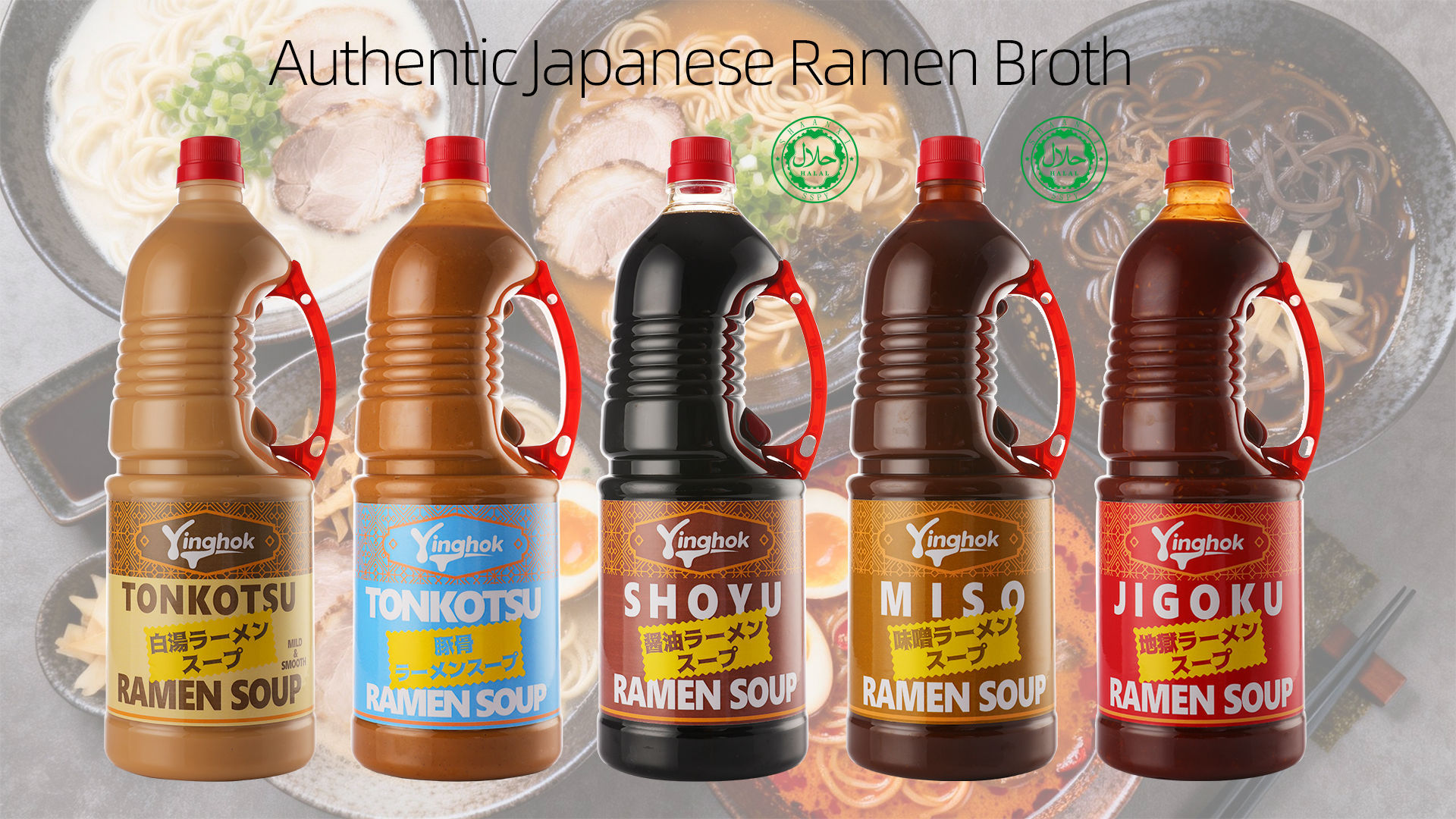
Format logic taken from our own range: tonkotsu, miso, shoyu, curry, jigoku and tomato bases are published as concentrates, with plant-based versions listed separately under vegetarian tonkotsu.
Custom Ramen Soup Base Parameters and Pilot Approval
A tolerance without a method is an argument waiting to happen. If the sheet says salt 6.5% ± 0.3% but never says how salt is measured, a buyer testing by refractometer and a factory testing by titration can both be right.
From number to method in one column
Every measured line carries the number, the tolerance and the method.
| Parameter | Unit on the sheet | Tolerance band | Method statement | Status for a new programme |
|---|---|---|---|---|
| Dilution ratio | parts base : parts water | One stated ratio, one bowl test | Weigh or measure base, fixed water volume | Fixed at pilot |
| Brix, liquid base | °Bx at 20°C | ±0.5 to 1.0 Bx | Refractometer, calibrated, sample at 20°C | To be confirmed per recipe |
| Salt content | % w/w | ±0.2 to 0.3 points | Same instrument family both ends | To be confirmed per recipe |
| Viscosity | mPa·s or flow time | Same reading at 20°C and 5°C | Named instrument, spindle or cup stated | To be confirmed at pilot |
| pH | pH units | One decimal place | Calibrated meter, temperature noted | To be confirmed at pilot |
| Net weight per case | kg per case | Per case, logged per pallet | Scale check, ten cases per pallet | Fixed with pack format |
The table refuses to invent a number for a recipe nobody has run: a new programme starts with “to be confirmed” and fills it at pilot, both parties testing the same sample on the same day.
Liquid bases need one line pastes rarely need: a rest statement. A pork-bone emulsion that reads correctly off the filler can separate within 24 hours, so viscosity is measured after a set rest and again after a chill to 5°C.
Bulk Ramen Soup Base Range Planning
Fewer than most buyers start with. Every extra base multiplies documents, labels, allergen checks and changeovers, and multiplies nothing on the menu. A complete-looking range usually runs on three to five bases.
Our published ramen soup base range shows the split: light and dark tonkotsu, miso, shoyu, curry, jigoku, tomato, chicken bone and a parallel plant-based family. Each exists because another base could not do its menu job.
The rule that keeps the count honest
- One base, one job. If the sentence “this base exists because the menu needs…” cannot be finished, the item is a variant, not a base.
- One pack, one fill line. An 18 L bag-in-box and a 1.8 L bottle of the same recipe need two documents: fill tolerance, closure and shelf expectation all differ.
- One claim, one evidence file. Halal, plant-based, MSG-free or allergen statements each add a document. Stack three claims on one SKU and the paperwork outgrows the sales.
Trimming a launch range from nine bases to five removes four label approvals, four QC sheets and four changeovers from the first cycle, and makes the 35–45 day window easier to hold.
Fewer bases also means deeper batch history per base, which is what makes a tolerance meaningful: five bases with ten batches each tell a buyer more than twelve with one.
Bulk Ramen Soup Base Packaging Formats
Pack format is not a container decision taken after the recipe is fixed; it changes what the recipe has to be. An 18 L bag-in-box emptied within days puts separation risk at the decanting step. A 1.8 L bottle reopened across a week needs a viscosity that pours from a narrow neck.
Three lines that prevent a fill dispute
- Declare the fill, not the containerA 1.8 L unit filled to 1,760 ml is compliant only if the declaration says so. State ml or kg per pack plus the headspace allowance.
- Fix the closure checkState the torque range and the seal test. A base that leaks in transit is a packaging failure blamed on the recipe.
- Name storage per pack sizeA 1.8 L bottle and an 18 L drum do not see the same heat on the same route.
A useful test when shortlisting: ask for the spec of two pack sizes of one recipe. If they differ only in the litre figure, fill and closure logic was never thought through.
Packaging also sets the dilution method. An 18 L bag-in-box with a tap lets a kitchen dose by weight; a bottle forces a jug, and the jug is where portion drift starts. For a 300 ml or 450 ml retail bottle, light stability leads, so the glass bottle versus pouch comparison belongs before the artwork.
Label version, language set and fill declaration are checked together at goods-in, not one document at a time.
Ramen Soup Base Manufacturer Repeatability
Repeatability is not a flavour statement, it is a document set. Two plants match a tonkotsu base only if they share raw material spec, process parameters, measurement methods and a batch record showing all three.
Our group runs sites in Dalian and Foshan, so the question is practical: what must be written down so a base from one plant matches the other?
Raw material spec
Same source category and grade for every input that moves flavour: pork bone, miso, soy, seaweed, mushroom.
Process parameters
Temperature, holding time, homogenising pressure and cooling profile written as a range with a target.
Measurement method
Same instrument family and sample temperature at both ends; a method gap is the usual cause of a “non-conforming” batch that is fine.
Batch record
Every measured parameter recorded per lot, with the operator name and the instrument used. Ten batches of one base tell a buyer more than one perfect sample.
Two failures recur. A substitution approved for one plant never reaches the other, so the bases drift quietly. A new refractometer invalidates six months of tolerance history overnight. Write both as revision clauses.
Custom Ramen Soup Base Lead Time
On our production calendar a custom ramen soup base programme runs 35–45 days from the date approved specification and artwork are released. The clock starts when both documents are signed, not at enquiry and not at purchase order.
Where the calendar actually goes
A buyer who counts from the purchase order plans a launch one to two weeks early, and pays for the gap in air freight on a product that weighs more than it looks.
| Calendar stage | Owner | Output | Date basis |
|---|---|---|---|
| Brief and flavour direction | Buyer plus factory R&D | Target profile, pack, market | Buyer timeline, factory clock not started |
| Pilot sample and bowl test | Factory R&D, buyer panel | Approved sample reference | Signed sample date |
| Specification and artwork release | Buyer QA, brand owner | Signed sheet, approved label | Clock starts here |
| Bulk production and filling | Factory production | Batch records, fill and seal checks | Inside the 35–45 days |
| QC release and case packing | Factory QC | Batch release certificate | Inside the 35–45 days |
| Shipping and clearance | Forwarder, importer | Arrival at warehouse | Outside the window |
Production window shown is our standard commitment of 35–45 days from approved specification and artwork; transit and certification lead time are additional.
If artwork is still in revision when the specification is signed, the window starts at the later date. The sheet carries artwork version beside recipe version: one line, one less surprise at loading.
Ramen Soup Base Supplier Comparison
The sample is the easiest part of sourcing and the least predictive. Any plant can make an acceptable 500 ml sample, because a sample gets attention. What separates suppliers is repeating it at 3,000 kg in month four.
Four questions that sort a shortlist quickly
- Show three batch records for a comparable baseThe parameters that matter are the ones that vary. A supplier who tracks them produces records in an afternoon.
- What is your changeover sequence between a tonkotsu line and a plant-based line?An answer that stops at “we clean” is not a sequence. Ask for the stage order and the verification step.
- Which date does your lead time count from?PO, deposit or approved spec, then the last three shipment records against a comparable order.
- Who signs the acceptance test, and what do they test?A name and a two-line method means a working QC gate. “Our QC team checks quality” means there is none.
These four treat the plant as evidence and the sample as a brochure, so a thin answer shows without tasting a fifth sample. The same logic runs through our supplier selection guide for importers and the bulk supply note for central kitchens.
Documentation sits alongside: site certifications, certificates of analysis tied to the lot number and a changeover protocol for plant-based lines are checkable in a week. A shortlist that survives is usually down to two.
Custom Ramen Soup Base Specification Failures
In the first ninety days it breaks on a change nobody wrote down: a pack substitution because the 18 L bag ran short, a move to a warmer bay, a dark tonkotsu base on a filler last used for miso. Each is a legitimate decision that silently rewrites the sheet.
Pack substitution
Another supplier of the same nominal 18 L container changes fill height and seal behaviour. That is a revision, not a purchasing convenience.
Storage drift
Two warehouses, one “cool, dry place” note. Write a temperature band and an owner per location.
Line reassignment
Colour and fat residue carry over. If the line changes, changeover verification changes with it.
Raw material swap
A new pork bone or miso source can move salt and body together. Require notification before any source change.
One clause that stops the drift
The countermeasure is a revision clause, not more vigilance: any change to container, line, storage or raw material source needs a written revision and a re-test. One clause, reviewed at ninety days, keeps the sheet true.
OEM Ramen Soup Base Documentation
A sample-driven order is settled by taste; a specification-driven order by a signed sheet, three batch records and a date basis. Five documents travel with every shipment, and asking at specification stage prevents the scramble at the port.
The five documents worth naming in the sheet
- Batch release certificate per lot, listing the parameters tested and results against the agreed window.
- Certificate of analysis where the market requires it, tied to the lot number printed on the case.
- Compositional and allergen statement matching the approved label version exactly, including “may contain” wording.
- Certification copies valid on the shipment date, with scope covering the finished product.
- Commercial set: invoice, packing list and the transport documents your forwarder needs.
The common failure is version mismatch: a label from month one, a statement from month two and a certificate valid in month three describe one product only if somebody checks the three dates together. Put them on one line.
Across a mixed pallet the rule tightens: one combined certificate for five bases satisfies nobody. The lot number on the case must match the certificate in the folder, base by base.
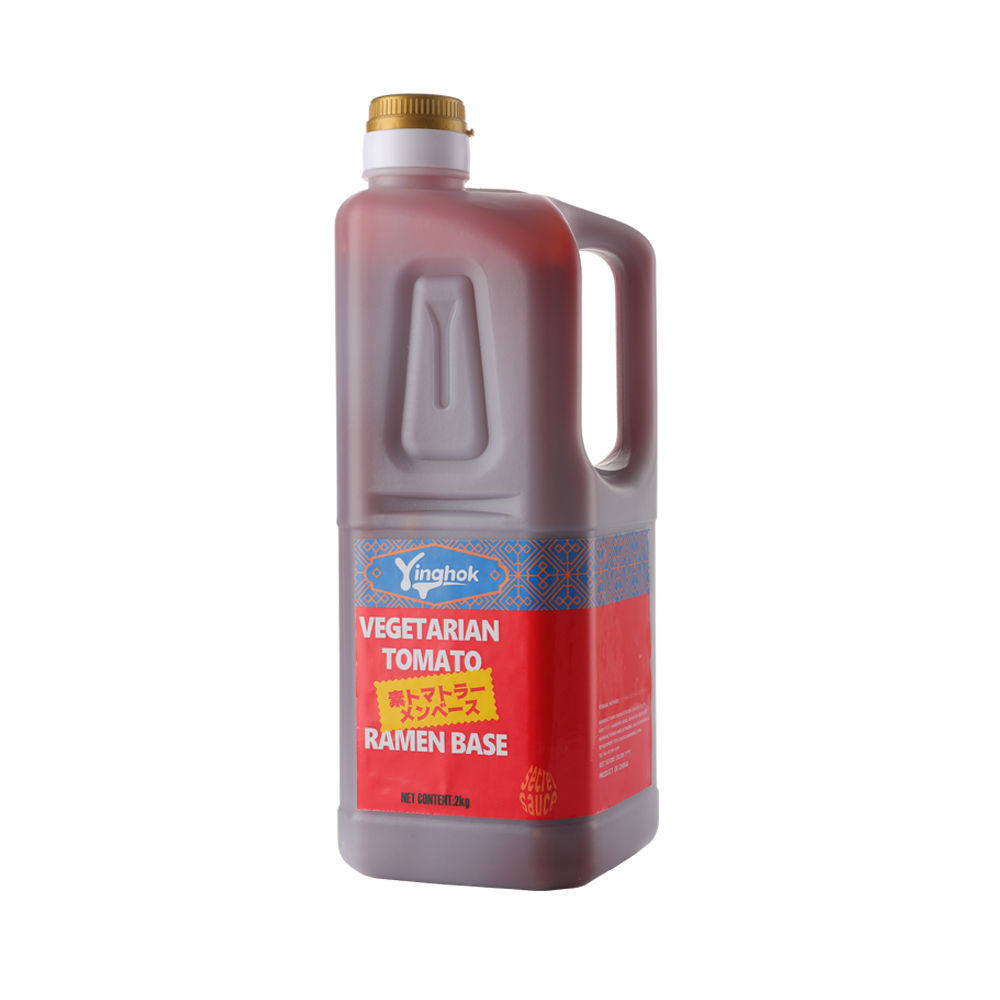
The bowl test is the last check, not the only one: it confirms dilution and body against numbers already agreed on paper.
Custom Ramen Soup Base Programme Checklist
The difference between the two buyers at the start of this article is a few hours of paperwork. It saves the renegotiation, the re-shipment and the stability argument, and it survives a change of staff on both sides.
The discipline is not new to manufacturing. BLOSSOM CHEER, a custom door and window manufacturer, has held the same principle for 30+ years in another industry: open the drawings, fix the tolerances, agree the date basis, then build. A ramen base line applies that logic to dilution.
We have run custom sauce programmes from our Dalian and Foshan plants since 2001, with OEM and ODM work across Japanese and international menus. The first step for a new ramen programme is not a price: it is a specification draft both sides can mark up.
Send us the brief your current specification is missing
Dilution target, pack sizes, target market and first-order volume are enough to start. We will return a draft specification with the parameters we can fix immediately and the ones that need a pilot, plus a 35–45 day production window counted from your approval date.
Asian cooking saucesNoodle sauces & basesRice bowl saucesMeat & BBQ saucesAbout our plants
What dilution ratio should I ask for on a ramen soup base?
Ask for the ratio the manufacturer actually tests, and ask for the method: 1:5 to 1:10 by volume is the usual band for liquid concentrates, 1:4 to 1:8 by weight for pastes. A ratio without a bowl test and a Brix or salt reading is only an advertisement.
Should the specification be written before or after the pilot sample is approved?
Draft it before, sign it after. The draft tells the pilot what to measure; the approved sample fills the tolerance column. A sheet written only after approval usually omits the parameters nobody thought to measure.
Is a liquid concentrate or a powder better for a chain with many sites?
Usually a concentrate for a central kitchen and a powder where dosing must be simple. A liquid base needs cold storage discipline, while a powder needs a moisture ceiling and consistent dispersion; both work if the sheet states the dilution method per site.
What does the 35–45 days include?
Bulk production, filling, labelling, case packing and QC release, counted from release of approved specification and artwork. Transit, label redesign and market-specific certification lead time sit outside the window.
How do I handle a recipe change after production starts?
Treat it as a specification revision: change the version number, re-test the affected parameters at pilot scale, and state which shipments the new version covers. An email-only change is how a compliant product turns non-conforming.
Can a plant-based base run on the same line as a pork-bone base?
Yes, with a documented changeover sequence and sourcing controls, and with the plant-based claim supported by its own evidence file. Ask for the changeover protocol and confirm the certificate scope names the finished product.