Bulk Asian Sauces for Central Kitchens: What Should Buyers Consider?
For central kitchens supplying multiple restaurants, catering operations, foodservice outlets, or institutional kitchens, purchasing Asian sauces in bulk is an operational decision as much as a sourcing decision. The right sauce program can help standardize recipes, simplify preparation, control portion costs, and coordinate supply across different locations.
However, buying larger quantities does not automatically make a sauce suitable for centralized food production. A sauce that works for one dish may need a different concentration, viscosity, or flavor intensity when used in another recipe. Packaging must also match the kitchen's consumption rate, storage capacity, and dispensing process.
For procurement managers, chefs, food production supervisors, and foodservice distributors, the key is to evaluate sauces as part of a complete production system.
This guide explains what buyers should consider when sourcing bulk Asian sauces for central kitchens, from product selection and recipe specifications to packaging, quality control, inventory planning, and long-term supplier cooperation.
1. Select Bulk Asian Sauces Based on Your Central Kitchen Menu
A central kitchen may prepare sauces for several dishes, restaurant brands, or service locations. Instead of purchasing products based only on flavor names, buyers should map each sauce to its actual menu application.
Build a Sauce Portfolio Around Production Requirements
Common Asian sauce categories for centralized food production include:
Japanese-style sauces: Teriyaki sauce, sushi sauce, noodle sauce, ramen soup base, Japanese simmering sauce, and sushi vinegar.
Chinese cooking sauces: Garlic sauce, black pepper sauce, chili sauce, sweet and sour sauce, seafood sauce, and braising sauce.
Korean-inspired sauces: Spicy noodle sauce, bibimbap sauce, Korean-style barbecue sauce, and cold noodle sauce.
General-purpose condiments: Dipping sauces, marinades, dressings, and customized cooking sauces for multiple menu applications.
The objective is not necessarily to purchase every category. Identify which sauces are used frequently, which are unique to specific dishes, and which can be shared across several recipes without compromising the intended flavor.
For example, a central kitchen supplying rice bowls, noodle dishes, and grilled meat may need three different sauce functions: a cooking sauce, a finishing sauce, and a dipping or serving sauce. Even if the products have similar flavor profiles, their viscosity and application requirements may differ.
Yinghok's Asian sauce product range includes multiple categories for wholesale and customized foodservice applications.
Prioritize Products by Usage and Purchasing Frequency
Before preparing a bulk purchasing plan, classify products into three groups:
• High-frequency sauces: Products used regularly across several menu items or kitchen locations.
• Specialized sauces: Products required for specific dishes, regional menus, or limited applications.
• Development products: New or customized sauces being tested before wider adoption.
This classification helps procurement teams decide which products require larger recurring orders and which should be purchased in smaller quantities during menu trials.
2. Define Sauce Specifications for Different Dishes
One of the main challenges in central kitchen procurement is that different dishes may require different sauce performance, even when they use a similar base flavor.
A sauce specification should therefore describe how the product behaves in the actual recipe, not simply list its flavor name.
Flavor Concentration and Application
The required concentration depends on the dish, serving size, and preparation method.
For example:
• Stir-fry sauces may need enough flavor intensity to season multiple ingredients during cooking.
• Rice bowl sauces may require a balanced flavor that works as a cooking ingredient or finishing sauce.
• Noodle sauces may need to coat noodles evenly without making the dish excessively salty or heavy.
• Soup bases may require a defined dilution ratio to achieve the intended broth volume and flavor.
• Dipping sauces may need a different consistency and flavor intensity from sauces used during cooking.
Buyers should provide the manufacturer with the intended application, recipe quantity, target serving size, and preparation method. This allows samples to be evaluated in the actual dish rather than judged only by tasting the sauce directly.
Establish Measurable Product Specifications
For each approved sauce, consider documenting:
• Flavor profile, including sweetness, saltiness, acidity, heat, and umami
• Viscosity and appearance
• Ingredient and allergen declarations
• Recommended usage ratio or application quantity
• Net content and packaging format
• Storage conditions and product-specific shelf life
• Relevant quality and food-safety requirements
Where appropriate, the specification may also include pH, fill weight, or other technical parameters agreed with the manufacturer. The relevant tests depend on the formulation, processing method, packaging, and identified food-safety hazards.
A clearly defined specification makes it easier to compare suppliers and investigate differences between production batches.
3. Choose Packaging According to Kitchen Workflow and Consumption
Bulk packaging can reduce handling and packaging costs in some purchasing situations, but the largest container is not always the most efficient choice.
Central kitchens should match package size to daily usage, storage capacity, dispensing requirements, and the time needed to consume an opened container.
Large-Format Packaging
Larger packs or bulk containers may be suitable for high-volume production kitchens that use the same sauce frequently.
Potential advantages include:
• Fewer package changes during production
• Less frequent replenishment of frequently used products
• More convenient handling for centralized dispensing systems
• Potentially more efficient storage and purchasing arrangements, depending on the packaging and logistics
However, buyers should consider container weight, transfer procedures, opening frequency, resealing, and the risk of handling errors. A large container may create unnecessary waste if the kitchen uses only a small quantity before the product's specified post-opening period.
Smaller Packs for Controlled Usage
Smaller packages may be more practical for specialized sauces, lower-volume locations, or products used in limited menu applications.
They can also help kitchens manage portioning and reduce the amount of product exposed during each production cycle.
Match Packaging to the Production Model
Central kitchen requirement | Packaging consideration |
High daily consumption | Larger foodservice packs or bulk containers |
Multiple production stations | Easy-to-handle packs with clear identification |
Low-frequency sauce usage | Smaller packs to support stock rotation |
Centralized dispensing | Packaging compatible with the dispensing process |
Multi-location distribution | Durable outer cartons and clear batch identification |
Yinghok's official Asian sauce information lists packaging options ranging from 40g plastic bags to bulk 20L containers. These are published examples of available packaging formats, not a guarantee that every formula is suitable for every size. Confirm packaging compatibility and availability for the specific sauce. See the custom Asian sauce packaging and wholesale range.
Share your estimated daily sauce consumption, preferred pack size, number of production locations, and expected order volume to discuss suitable packaging and purchasing arrangements.
4. Maintain Batch Consistency Across Production and Locations
For central kitchens, sauce consistency is not only about whether two samples taste similar. The product must also perform consistently when prepared by different employees, used in different recipes, and distributed to different locations.
Approve a Standardized Recipe
For every sauce, document the approved recipe and preparation procedure. Depending on the application, this may include:
• Sauce quantity per batch or serving
• Water or other dilution requirements
• Mixing and heating instructions
• Ingredient addition sequence
• Cooking time and process conditions
• Finished product appearance and sensory characteristics
• Portioning and dispensing instructions
If a central kitchen supplies several outlets, distribute the same approved recipe and preparation instructions to all relevant teams.
Define Batch and Change-Control Requirements
Discuss with the manufacturer how production batches are identified and how changes are handled.
Buyers should clarify:
• How batch numbers and production dates are recorded
• How raw-material or ingredient substitutions are communicated
• How product specifications are reviewed before changes
• What checks are conducted before product release
• How complaints and non-conforming batches are investigated
For a customized sauce, any approved change in formulation, ingredient source, processing, or packaging should be assessed for its effect on product quality, food safety, labeling, and shelf life.
A documented change-control process is particularly important when a sauce is used across multiple recipes or locations.
5. Plan Storage, Inventory and Replenishment Together
Bulk purchasing requires coordination between procurement, warehouse management, production planning, and kitchen operations.
Ordering too frequently can increase purchasing and logistics workload. Ordering too much can tie up working capital and increase the risk of excess inventory or product loss.
Use Consumption Data to Build a Purchasing Forecast
A practical purchasing forecast should consider:
• Historical sauce consumption by SKU
• Planned menu volume and seasonal demand
• Number of kitchens or outlets supplied
• Production lead time and delivery schedule
• Current inventory and goods in transit
• Supplier MOQ and packaging configuration
• Safety stock policy established by the business
A useful starting point is to calculate the expected usage of each sauce over the replenishment period, then compare it with available stock and confirmed incoming orders.
Do not use one forecast for every sauce. High-volume staple sauces and low-frequency specialty sauces often require different replenishment strategies.
Manage Shelf Life and Opened-Pack Handling
The shelf life of a sauce depends on its formulation, processing, packaging, and storage conditions. Buyers should obtain the current product specification and label information for each SKU rather than applying a general shelf-life assumption to all Asian sauces.
Central kitchens should establish procedures for:
• Checking the product's stated storage conditions
• Recording receipt dates and batch numbers
• Rotating stock according to the business's approved stock-control system
• Marking opened containers where required
• Following product-specific post-opening instructions
• Discarding products according to the label and applicable food-safety rules
For U.S. foodservice operations, the FDA issued the 2026 Food Code on September 17, 2026. It is a model code intended to guide state, local, tribal, territorial, and federal jurisdictions in developing food-safety requirements for retail and foodservice establishments. Its provisions should be considered alongside the rules adopted by the relevant local authority. FDA Food Code 2026.
The storage instructions for a manufactured sauce and the food-handling requirements for a prepared dish are not necessarily the same. Follow the manufacturer's product-specific label and specification, applicable local regulations, and advice from qualified food-safety professionals.
6. Evaluate the Manufacturer's Quality, Certification and Supply Capability
A central kitchen needs a supplier that can support the agreed specifications, production schedule, and replenishment plan. A low unit price alone does not establish whether a manufacturer is suitable for long-term cooperation.
Review Manufacturing and Quality Documentation
Before approving a supplier, ask for relevant documentation, which may include:
• Product specifications and ingredient information
• Allergen declarations
• Relevant test reports
• Batch traceability and complaint-handling procedures
• Manufacturing-site details
• Applicable food-safety certificates
• Storage and handling instructions
For certification claims, verify the actual certificate, legal entity, manufacturing site, scope, certification body, and validity.
BRCGS Food Safety Issue 9, published on August 1, 2022, provides a framework for food-safety, quality, and operational criteria in food manufacturing. Buyers should check the current certification status and applicable requirements directly with the relevant certification body and BRCGS. BRCGS official standard information.
The Codex Alimentarius General Principles of Food Hygiene (CXC 1-1969), published in its updated format in 2023, covers Good Hygiene Practices and HACCP principles. It is a useful international reference when assessing food-hygiene controls, but it does not by itself certify an individual manufacturer. FAO/WHO Codex publication.
If Halal status is required, verify the certificate's product scope, manufacturing site, issuing body, validity, and acceptance in the destination market. Do not assume that one certificate covers every sauce or production site.
Review MOQ and Production Lead Time
Yinghok's official wholesale FAQ states that MOQ varies by product and typically starts at 25–50 cartons, or an equivalent weight, for standard flavors. Custom formulas may require higher quantities. These are general published reference terms, not a fixed quotation for every product. Confirm the current MOQ, production lead time, and packaging requirements for each SKU.
A suitable foodservice sauce supplier should be able to discuss the product specifications, packaging, production arrangements, and replenishment requirements relevant to your central kitchen operation.
7. Sample Development, Bulk Orders and Export Coordination
Before placing a large order, buyers should validate the product under actual production conditions.
Step 1: Prepare a Central Kitchen Product Brief
Provide the manufacturer with:
• Sauce category and intended menu applications
• Existing recipe or target flavor description
• Usage quantity per dish or production batch
• Desired concentration and viscosity
• Ingredient restrictions and allergen requirements
• Preferred packaging and estimated consumption
• Destination market and required documentation
Step 2: Test Samples in Real Recipes
Evaluate the sample using the ingredients, cooking equipment, preparation sequence, and serving quantities used in the central kitchen.
Record the results, including flavor, consistency, preparation time, portion control, and feedback from kitchen staff. If the product needs adjustment, communicate specific changes rather than general comments such as “make it stronger.”
Ask for samples of the relevant sauce categories and confirm the product specification, preparation instructions, and sample arrangements before conducting your kitchen trial.
Step 3: Confirm the Commercial and Technical Agreement
Before mass production, agree on the approved formula, product specification, packaging, label information, MOQ, pricing, payment terms, production schedule, and quality requirements.
For customized products, also clarify formula ownership, change-control responsibilities, and the approval procedure for future revisions.
Step 4: Coordinate Bulk Supply and Export
For international procurement, confirm the responsibilities of the manufacturer, exporter, importer, and logistics provider.
Discuss shipping terms, carton and pallet specifications, product documentation, certificate requirements, customs information, and delivery schedules before production is finalized.
For U.S. imports, covered food importers may have obligations under the FDA Foreign Supplier Verification Programs (FSVP) rule. Requirements depend on the importer, product, and applicable exemptions or modified requirements. For other markets, confirm the relevant import, food-labeling, and certification requirements with local authorities or qualified compliance professionals.
A reliable supply arrangement should include a practical process for sharing forecasts, placing repeat orders, communicating delays, and managing specification changes.
Planning Bulk Asian Sauce Procurement for Your Central Kitchen?
A successful central kitchen sauce program starts with the right product portfolio, but long-term performance depends on much more: application-specific specifications, suitable packaging, controlled preparation procedures, batch consistency, and realistic replenishment planning.
Yinghok offers Asian sauce solutions for foodservice and central kitchens, including wholesale and customization options for different menu applications. Buyers should confirm product availability, manufacturing-site documentation, packaging suitability, MOQ, lead time, and export requirements for each selected sauce.
Share your sauce categories, menu applications, estimated monthly consumption, packaging preferences, and destination market to begin discussing a suitable bulk purchasing plan.
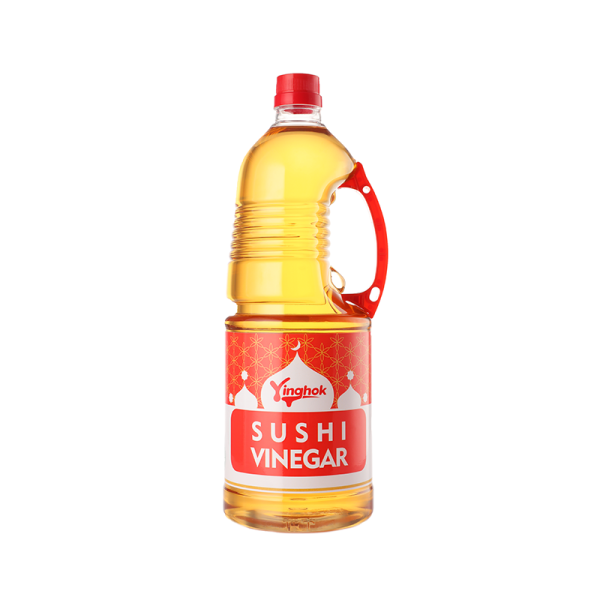
Sushi vinegar, a carefully crafted specialty seasoning, is essential for making Japanese authentic sushi.
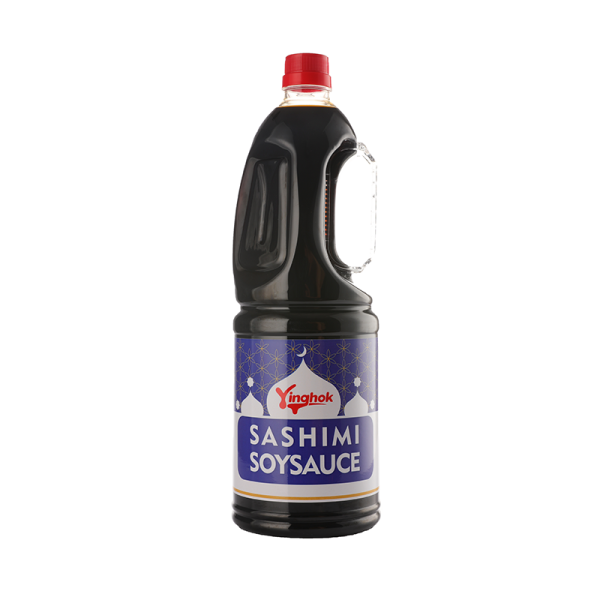
Halal certified sashimi soy sauce with smooth and delicate taste, perfect for halal Japanese cuisine and daily dining.
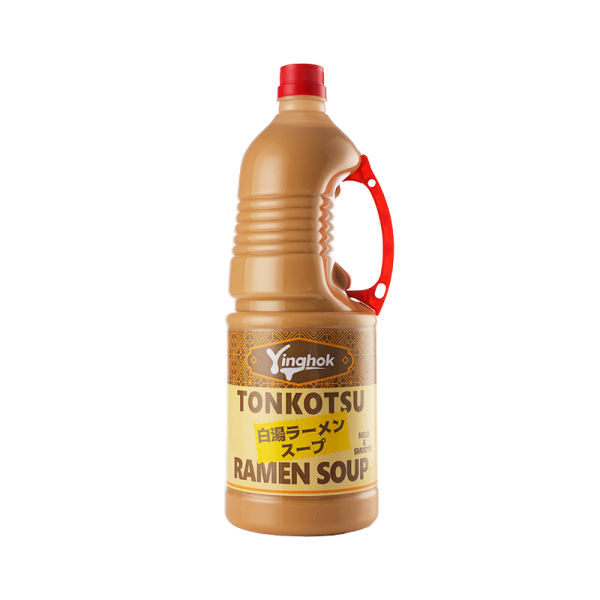
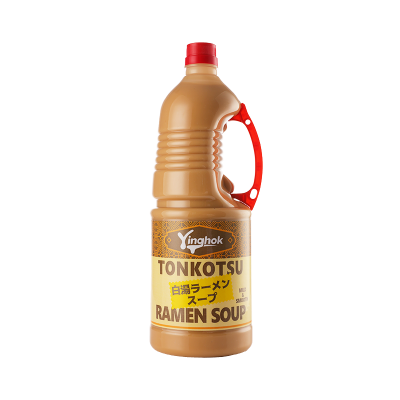
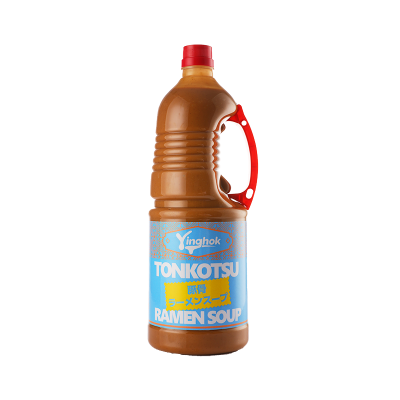
The tonkotsu ramen soup is the soul of Japanese tonkotsu ramen, rich, mellow and delicious without being greasy.
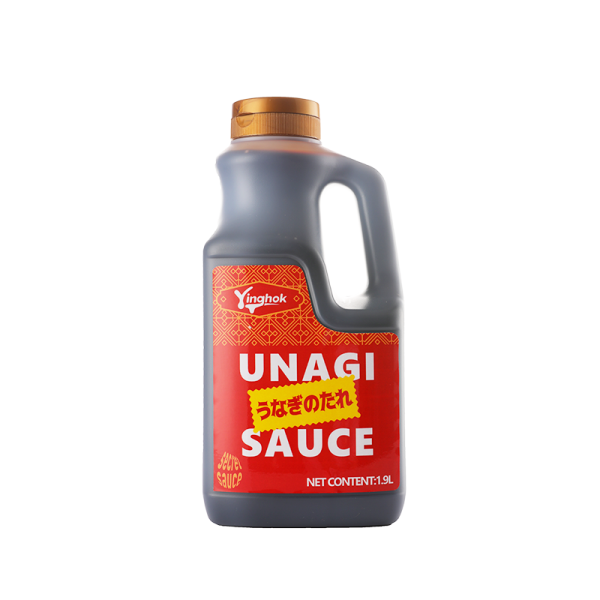
Unagi sauce is the core seasoning sauce for eel in Japanese cuisine, characterized by its rich sweet-and-savory flavor.