Rice Vinegar vs. Grain Vinegar for Sushi & Food Manufacturing: A B2B Comparison

Rice Vinegar vs. Grain Vinegar for Sushi & Food Manufacturing: A B2B Comparison
The rice vinegar vs grain vinegar decision is one of the most consequential choices in a Japanese seasoning specification, and it is frequently made on price alone. That is a mistake. The two vinegars differ in raw material, acidity profile, aroma and behaviour in sushi rice, dressings, pickles and processed foods — and those differences decide whether a product tastes authentic or merely acidic.
This comparison is written for B2B buyers: sushi chains and central kitchens, foodservice distributors, sauce manufacturers, ready meal producers and private label brands sourcing bulk Japanese vinegar. It covers how the two vinegars are made, how they behave, where each one wins, how to specify and source them without creating a quality or cost problem downstream, and which supporting seasonings belong alongside them in the same formulation.
What Is Rice Vinegar?
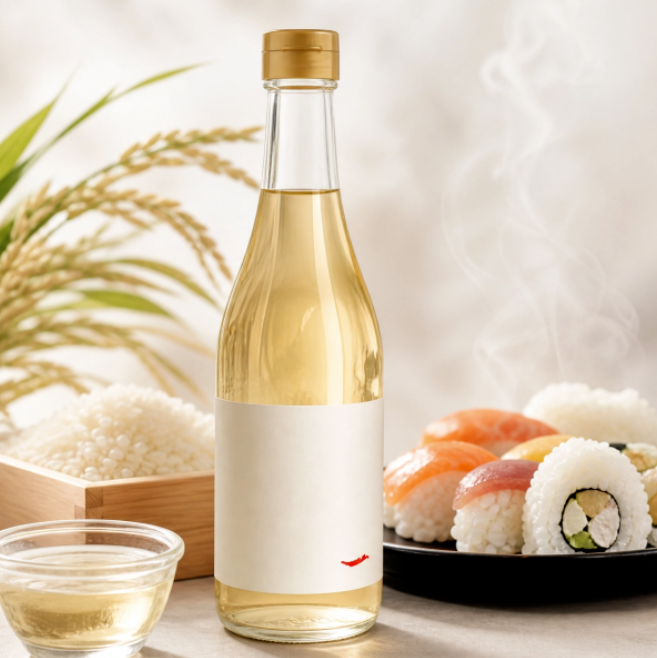
Rice vinegar is produced by fermenting rice, or a mixture of rice and rice koji, into alcohol and then acetic acid. In Japanese cuisine the category is dominated by komezu, the mild, slightly sweet vinegar that sits at the heart of sushi rice seasoning.
Its defining commercial characteristics are a gentle acidity, a clean aroma and a faint sweetness that comes from the rice base. Those traits make it the default choice wherever the vinegar needs to support other flavours rather than dominate them — which is exactly the requirement in sushi rice, sunomono, marinades and Japanese dressings.
How rice vinegar is made
Production runs in two stages. First, rice starch is saccharified and fermented to alcohol using koji and yeast. Second, that alcohol is oxidised to acetic acid by acetic acid bacteria in a controlled aerated tank. The koji stage is what generates the free amino acids and residual sugars that later read as roundness and slight sweetness, and it is the reason two vinegars with identical acetic acid levels can taste completely different.
Where rice vinegar is positioned commercially
- Premium and authentic Japanese positioning in retail and foodservice
- Sushi and Japanese cuisine where the acid must not overpower fish or nori
- Pale products where a darker vinegar would visibly shift the colour
- Products with delicate dairy, seafood or vegetable notes that a sharp acid would blunt
If you need the finished sushi seasoning rather than the base vinegar, our custom sushi vinegar range covers blended, ready-to-use formats alongside the raw ingredient.
What Is Grain Vinegar?
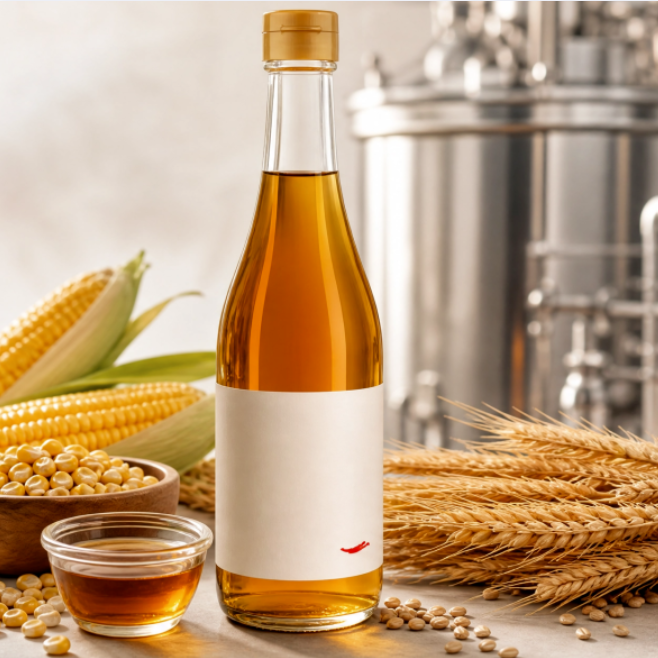
Grain vinegar is produced from grains other than rice — commonly wheat, corn or a mixed grain mash — fermented to alcohol and then to acetic acid. The result is a sharper, more assertive vinegar with a stronger acetic top note and less of the round, cereal sweetness found in rice vinegar.
In industrial use grain vinegar offers two practical advantages: it is usually more economical per unit of acidity, and its stronger profile holds up in products where the vinegar has to survive heat, dilution or long shelf life without tasting thin.
Raw material variations worth knowing
"Grain vinegar" is a category, not a single specification. A wheat-based vinegar behaves differently from a corn-based one, and blended grain mashes sit somewhere between. When you write a specification, name the raw material rather than accepting the generic label — it affects aroma, colour and how the vinegar interacts with strong backgrounds such as tomato, mustard and spice.
Where grain vinegar is positioned commercially
- Value and everyday positioning where the vinegar is an acidulant first
- Robust processed foods including retorted, canned and long shelf-life products
- Pickling and preservation systems that need decisive, clean acidity
- Non-Japanese applications where a stronger profile integrates rather than intrudes
Acidity, Flavour and Aroma: The Core Differences
Most commercial vinegars are standardised to around 4–5% acetic acid, so the headline number is often identical. What differs is what surrounds that acidity.
| Attribute | Rice vinegar | Grain vinegar |
|---|---|---|
| Raw material | Rice, with rice koji | Wheat, corn or mixed grain mash |
| Acidity | Gentle and rounded | Sharper, more assertive |
| Aroma | Clean, faintly sweet, delicate | Stronger, more pungent acetic note |
| Sweetness | Slight natural sweetness | Low; reads as dry |
| Colour | Pale to light amber | Usually darker |
| Effect on other flavours | Supports and lifts without masking | Leads the profile and can dominate |
| Cost per unit of acidity | Higher | Lower |
| Typical B2B use | Sushi, dressings, Japanese marinades | Acidulation, pickles, robust sauces |
Two consequences follow from the table. First, comparing the two on acetic acid percentage alone tells you almost nothing about how the finished product will taste. Second, when you swap one for the other, salt, sugar and total acid must all be rebalanced — a straight one-for-one substitution is the most common formulation error in this category.
How Rice Vinegar Works in Sushi Rice and Japanese Formulations

Sushi rice is the clearest case for rice vinegar, and the reason is not tradition alone. Seasoned rice vinegar is a functional system: the acid firms the surface of the rice, the slight sweetness balances the salt, and the clean aroma leaves the fish and nori as the leading characters.
What the vinegar is actually doing to the rice
Acid lowers the pH at the rice surface and makes the grains hold their shape while the seasoning is absorbed evenly across the batch. A mild vinegar lets that happen without the sourness climbing to a level where the fish reads differently from one batch to the next. This is why sushi operators typically treat rice vinegar as a fixed specification rather than a variable they re-bench per menu change.
Applications in Japanese cooking
- Sushi rice seasoning: seasons without pushing the finished bite toward sourness, and keeps the rice visually pale.
- Japanese dressings and sunomono: the sweetness and gentle acidity let dashi, soy and sugar remain legible in the finished flavour.
- Light sauces and marinades: colour contribution is minimal, so pale sauces stay pale.
- Ready meals and chilled foods: the acid level contributes to preservation without making the product taste sharp on reheating.
- Cold noodles and seafood dishes: supports freshness without competing with delicate garnishes.
Why sushi chains standardise on rice vinegar
Across multiple sites and shifts, a sushi operator needs the rice to taste identical every day. A mild, low-variance rice vinegar is easier to hold at target than a sharp grain vinegar, where small dosage errors swing the finished bite noticeably. When the same operator also produces sauces and marinades, keeping the seasoning set consistent across products matters just as much — which is the practical argument for sourcing vinegars and companion seasonings from one specification partner.
Many Japanese formulations pair vinegar with fermented rice seasonings rather than using acid alone. Custom mirin contributes sweetness and gloss, while cooking sake adds savoury depth and suppresses the raw note in fish and meat — see our technical guide on how cooking sake improves umami and removes odors for the mechanism and dosages.
Where Grain Vinegar Performs Better
Grain vinegar is not the cheaper compromise. In several categories it is the technically correct choice.
Cost-sensitive acidification
Where vinegar is present mainly as an acidulant rather than a flavour, grain vinegar delivers comparable acidity at a lower cost per unit.
Robust processed foods
In retorted, canned or long shelf-life products the sharper profile survives processing and dilution that would flatten a mild rice vinegar.
Pickles and preservative systems
Where a decisive, clean acidity is wanted and the vinegar is a functional preservation tool rather than a subtle seasoning.
Non-Japanese applications
In Western sauces, dressings and condiments, the stronger grain profile integrates with stronger backgrounds such as tomato, mustard and spice.
Practical limits to watch
Two constraints catch buyers out. Because grain vinegar reads as dry and sharp, formulations that relied on rice vinegar's subtle sweetness often need a small sugar or mirin addition to restore balance. And because it is usually darker, dosage in pale sauces and clear dressings should be validated against the actual retail container — a colour shift that is invisible in a benchtop bowl can be obvious through glass on a shelf.
Side-by-Side Comparison for Production Decisions
| Decision point | Rice vinegar | Grain vinegar |
|---|---|---|
| Sushi rice seasoning | Preferred default | Not recommended as the primary acid |
| Japanese dressings and marinades | Preferred default | Possible in stronger blends only |
| Pickling with a sharp profile | Works where a mild pickle is intended | Preferred |
| Cost per unit of acidity | Higher | Lower |
| Colour impact in pale sauces | Minimal | Noticeable, especially at higher dosage |
| Behaviour through retort or long shelf life | Contributes softly | Holds its presence |
| Dosage tolerance in delicate products | Forgiving | Narrow; small errors are perceptible |
| Private label retail positioning | Premium Japanese positioning | Everyday and value positioning |
| Supporting seasonings that pair well | Mirin, cooking sake, dashi-based bases | Sugar or mirin to restore balance |
Specialty Vinegars and Blending Strategies
Many manufacturers do not choose one vinegar and stop there. Blending is common, and there is a third option worth knowing about — chrysanthemum vinegar, a specialty Japanese vinegar with a distinctive floral aroma used to differentiate premium product lines.
Why blending is often the commercial answer
A rice vinegar base carries the flavour and positioning; a measured proportion of grain vinegar contributes acidity and robustness at a lower blended cost. The finished product can be milder than pure grain vinegar while costing less than pure rice vinegar — which is frequently how a mid-tier retail or foodservice line is built.
- Define the target acid perceptionDecide whether the finished product should taste gently seasoned or decisively acidic before selecting any raw material.
- Set the acid level, then choose the sourceStandardise both vinegars to comparable acetic acid first, so a comparison reflects character rather than strength.
- Blend for both charactersA rice vinegar base with a small proportion of grain vinegar can deliver rounded flavour with robust shelf-life behaviour.
- Re-check salt and sugar balanceChanging the vinegar changes perceived sourness, which shifts how sweet and salty the product reads.
- Confirm through the real processValidate in retort, chilled or frozen format before committing to a bulk specification.
- Fix the specification in writingAcidity, colour, raw material and tolerance ranges should be documented so the second order behaves like the first.
Sourcing and Customisation for B2B Buyers
Once the technical choice is made, the sourcing questions are the same for both categories, and they decide landed cost as much as quality.
Acetic acid spec
Confirm the standardised acidity and the tolerance, not just the nominal 4–5% figure.
Colour and clarity
Critical in pale sauces and clear dressings. Specify a range and test against the container used at retail.
Packaging format
Bulk containers for manufacturers, foodservice packs, or private label retail formats with your own branding.
Documentation
Specification sheet, batch certificate of analysis and certification as required by your destination market.
Yinghok supplies custom vinegar series products for restaurants, distributors, food manufacturers and retail brands, including rice vinegar, grain vinegar and chrysanthemum vinegar. Buyers can specify acidity, flavour direction, colour, packaging and private label requirements, and pair the vinegar selection with sushi vinegar, custom mirin and cooking sake from the same custom Japanese seasonings range to keep the whole seasoning set consistent.
Questions to put to any vinegar supplier
- What is the standardised acetic acid level and its tolerance band?
- Which raw material is used, and can it be held constant across orders?
- What colour range should be expected, and how is it measured?
- What packaging formats are available, and what is the minimum order quantity for each?
- Which documents accompany each batch, and how quickly can they be supplied for an audit?
- Can the formulation be adjusted for a specific product, or is only a fixed catalogue available?
Frequently Asked Questions
Can grain vinegar be substituted for rice vinegar in sushi rice?
It can technically be used, but the result is noticeably sharper and less authentic, and the darker colour can dull the appearance of the rice. For sushi rice, rice vinegar is the correct specification.
Is rice vinegar always more expensive?
Usually, because japonica rice is a more costly raw material than wheat or corn. The gap narrows when you compare on delivered cost and account for the higher dosage that a sharply acidic grain vinegar may need in delicate applications.
Which vinegar should a private label retail brand choose?
Match the vinegar to the shelf positioning. Premium Japanese positioning generally calls for rice vinegar, while everyday or value lines can use grain vinegar where the flavour brief allows, or a blend that balances both.
Do both vinegars need refrigeration in bulk?
No. Vinegar is naturally stable and is normally stored cool and out of direct light. The practical supply issue is container sealing and stock rotation rather than cold chain.
Can the acidity of either vinegar be customised?
Yes. Acidity, colour and flavour direction can all be adjusted to a written specification, which is generally how manufacturers match a vinegar to an existing recipe rather than reformulating around a catalogue product.
How does vinegar compare with cooking sake or mirin in a formulation?
They do different jobs. Vinegar supplies acidity and preservation, mirin supplies sweetness and gloss, and cooking sake supplies savoury depth and odour suppression. Most authentic Japanese formulations use two or all three together rather than substituting one for another.
Choosing Between Rice Vinegar and Grain Vinegar
The short version: choose rice vinegar when the vinegar is a seasoning and flavour authenticity is the priority — sushi rice, Japanese dressings, marinades and premium positioning. Choose grain vinegar when the vinegar is functioning primarily as an acidulant or preservative under cost pressure, or when the product background is strong enough to carry a sharper profile. Choose a blend when you need the flavour of one and the economics of the other.
For manufacturers who need more than one option, the most efficient route is a single supplier able to produce all categories to a written specification, with consistent acidity and colour and full batch documentation. Yinghok's vinegar production covers rice vinegar, grain vinegar and chrysanthemum vinegar in bulk, foodservice and private label formats.
Request a free sample and OEM/ODM consultation
Related reading on this site: Custom Japanese Seasonings Custom Vinegar Series Custom Sushi Vinegar Custom Mirin Series Custom Cooking Sake Series Cooking Sake: Umami & Odor Removal